Gorean Lifestyle - House of Phoenix
A view of the Gorean Lifestyle and Philosophy based on the Books
Series 1.c – Key Gorean Concepts for Beginners: Home Stone, Caste, Natural Order & More
If you’ve read the first two episodes of this series, you already know two things:
- Gor is fiction first – a rich, provocative world created by John Norman.
- The Gorean lifestyle is not a literal copy of that fiction, but a modern, consensual, adult choice.
In this third episode, we’ll start building your Gorean vocabulary.
We’ll look at some of the core concepts you’ll see again and again – in the books and in Gorean-inspired communities:
- Home Stone
- Caste
- Natural Order
- Mastery & Submission
- Free Companionship
- The Collar & Oath
- Swords, Cities & Symbols (briefly)
For each one, I’ll explain:
- What it means in the world of Gor
- How people do (or don’t) use it in real-life Gorean-inspired practice
And along the way, we’ll spend some time demystifying the idea of “Natural Order” – especially the bit about male dominance and female submission.
1. Home Stone – More Than Just a Rock
In the books
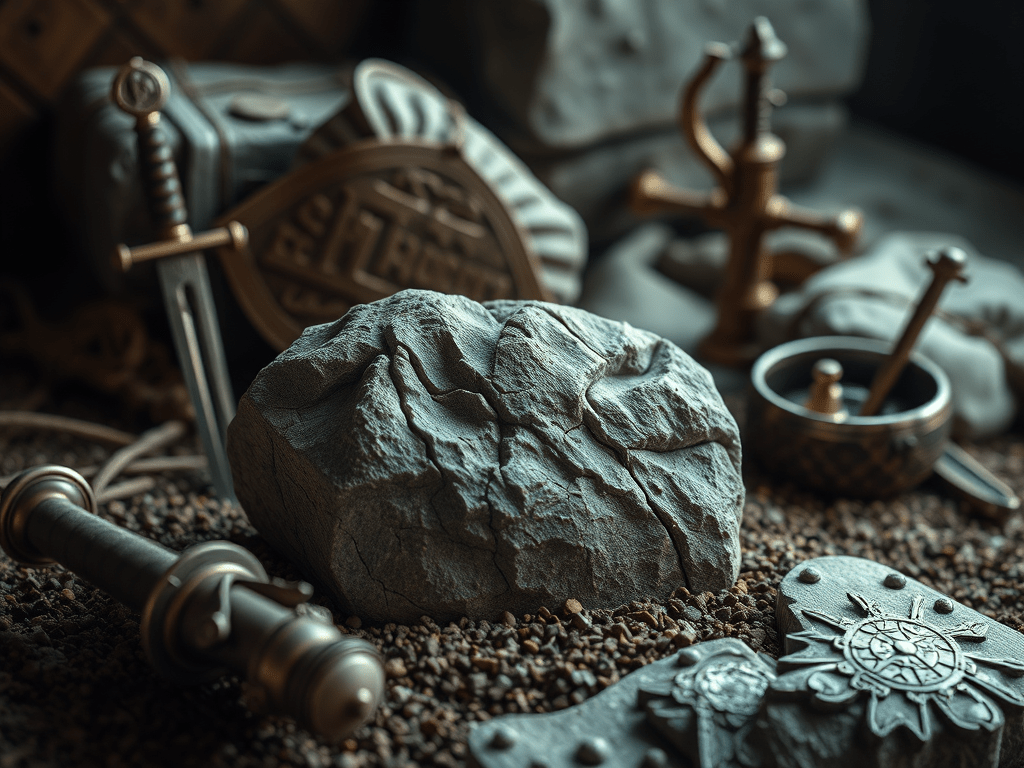
On Gor, a Home Stone is a small, usually unremarkable stone that represents:
- a city, a tribe, a place; or
- sometimes, a personal oath or chosen home
It’s not the stone itself that matters, but the meaning placed in it.
For a Gorean, to swear by a Home Stone is to swear by everything one holds dear:
their people, their honor, their belonging.
To betray your Home Stone is to betray yourself.
In modern lifestyle practice
Most Gorean-inspired people don’t literally keep a sacred rock on a pedestal (though some do, and there’s nothing wrong with that).
Instead, Home Stone becomes a metaphor for:
- Chosen loyalty – to a partner, a household, a family, a tribe of close friends
- Belonging – “This is my home; these are my people.”
- Shared values – the code that holds a household together
Some couples or households:
- actually create a physical “Home Stone” as a symbol
- write a small statement of values or a “House Law” attached to it
- use it in rituals of commitment, collaring or free companionship
The key idea is simple and powerful:
You don’t just float through life. You stand for something. You belong somewhere by choice.
2. Caste – Role, Duty and Specialization
In the books
Gor is structured by castes – groups defined by their role in society:
- Warriors
- Physicians
- Scribes
- Builders
- Merchants
- And many others (even the Peasants are a proud caste)
Your caste:
- shapes your education
- defines your public duties
- often influences your sense of honor and identity
It’s not just a job; it’s a calling.
In modern lifestyle practice
Obviously, we don’t live in a caste-based city-state system.
But the idea of caste translates into:
- Admiration for excellence – taking pride in doing something really well
- Responsibility – knowing what you’re “about” and showing up for it
- Role clarity – not being ashamed of your natural strengths
Many Gorean-inspired people reflect on questions like:
- “What is my ‘caste’ in a symbolic sense? Am I a natural protector, healer, organizer, builder, scholar, servant?”
- “How can I honor that in the way I live, work and relate?”
In households, you might see:
- the “Warrior” temperament taking the lead in protection and direction
- the “Scribe” temperament handling records, finances, planning
- the “Builder” temperament organizing practical projects
- service-oriented personalities taking pride in domestic and emotional labor
Caste here isn’t about “higher” or “lower” worth. It’s about:
Knowing your strengths and embracing the role that lets you give your best.
3. Natural Order – Not a Weapon, but a Lens
This is one of the most misunderstood ideas in Gor, so let’s take our time.
In the books
John Norman’s Gor is built around the idea of a “Natural Order” – a way things supposedly “are” in terms of:
- strength and weakness
- hierarchy and leadership
- the relationship between man and woman
In the novels, men are generally portrayed as naturally dominant and women as naturally submissive, and the societies of Gor are arranged accordingly.
The fictional world pushes this idea to provocative extremes: slavery, conquest, forced submission. That’s part of what makes it so controversial.
In modern lifestyle practice
Real-world Gorean-inspired people are not living in a novel.
So how do people use “Natural Order” without turning it into a club to hit others with?
Most thoughtful Gorean-inspired practitioners look at it this way:
- Humans are not blank slates. We’re shaped by biology and culture. On average, men and women can differ in drives, strengths and inclinations – but with huge overlaps and countless exceptions.
- Some people feel deeply “right” in traditional polarity. A man who feels most fully himself when he leads, protects, decides, bears responsibility. A woman who feels most fully herself when she yields, trusts, serves, and offers her feminine strength in devoted support.
- For those people, fighting that inner shape can be miserable. When you are wired for deep surrender or strong leadership and you’re told that makes you “wrong”, “weak”, “toxic” or “misogynistic”, you can end up living at war with yourself.
- Choosing to honor that inner shape – with consent – can be freeing. A male-led, female-submissive relationship doesn’t have to be about superiority or inferiority. It can be a chosen dance between equals in worth, with different roles.
So in practice, “Natural Order” becomes:
The idea that it is okay – more than okay, deeply healthy for some – to live in alignment with the roles and polarities that feel natural to you, instead of forcing yourself into a politically convenient mold.
Important points:
- It is not a universal rule that “all men must dominate, all women must submit.”
- It is not a justification for treating anyone as lesser, disposable or voiceless.
- It is not an excuse for ignoring consent, law or ethics.
Instead of “Nature says you have to…”, a healthy Gorean-inspired mindset says:
“If, in your nature, you feel called to lead as a man or to submit as a woman, you do not need to be ashamed of that. You can build a conscious, ethical life around it.”
You are always free to say:
- “That’s not who I am”
- “I prefer equality in roles”
- “I’m a dominant woman / submissive man / something else entirely”
The “order” is not a law; it’s a lens through which some people recognize themselves.
4. Mastery & Submission – Power as a Shared Project
In the books
Gor is full of masters and slaves, in very literal, often brutal ways. The master’s will is law; the slave is property.
That’s fiction.
In modern lifestyle practice
Real-world Gorean-inspired dynamics transform that into consensual power exchange:
- One partner (often male) takes the Dominant / Master / Leader role
- The other partner (often female) takes the submissive / kajira / slave role
- Both agree to this dynamic freely and can renegotiate or revoke it if needed
Done well, this is not a one-sided feeding of ego. It’s a shared project:
The dominant / master:
- takes responsibility for direction, protection, decision-making
- values the submissive’s well-being, feelings and limits
- works on his own self-mastery so his power is safe, not chaotic
The submissive / kajira:
- chooses to obey and serve within agreed boundaries
- offers trust, vulnerability, devotion and effort
- finds pride and fulfillment in serving well and surrendering deeply
Both bring strength. Both take risks. Both rely on each other.
Far from being humiliating, many submissive women describe this path as:
“The first time I was allowed to be fully, openly myself – without pretending to be something else to be accepted.”
Again: this is not for everyone. But for those who are wired this way, it can feel like coming home.
5. Free Companionship – Gor’s Version of Marriage
In the books
A Free Companionship is Gor’s closest equivalent to marriage. It is:
- public
- formalized
- often bound by contract and ceremony
- sometimes limited in duration (for a Gorean year, renewable)
It is a union between Free Persons – traditionally a man and a woman.
In modern lifestyle practice
Some Gorean-inspired couples borrow the term Free Companion to describe:
- a committed relationship that blends
- companionship
- love
- power exchange (if they choose)
- shared purpose / “Home Stone”
For some, it’s a way to say:
“We are more than boyfriend/girlfriend, but what binds us is also deeper than a legal certificate.”
A Free Companionship in a modern context may include:
- personal vows
- House rules and roles
- symbols (rings, collars, tokens)
- domestic structure that reflects their chosen dynamic
You can think of it as:
A partnership where love, commitment and agreed roles are all openly acknowledged and honored.
6. The Collar & Oath – Visible Signs of Invisible Choices
In the books
The collar marks slavery on Gor. A collared woman is legally owned property.
Again: fiction.
In modern lifestyle practice
The collar is one of the most powerful symbols Gorean-inspired people bring into real life – but the meaning changes radically:
- It becomes a chosen symbol of belonging and commitment
- It marks an agreement, not a legal status
- It is placed on someone with their full, informed consent
Being collared in a Gorean-inspired dynamic often means:
- “I have given myself in service and loyalty to this person/household.”
- “I accept their authority within agreed boundaries.”
- “I choose to be marked as theirs.”
For many submissive women, the collar is:
- a source of pride
- a reminder of purpose
- a tangible reassurance of being seen, wanted and held
For the dominant, it is:
- a reminder of duty
- a visible sign of the trust placed in him
- a call to be worthy of that trust
The weight of a collar is not in the metal.
It’s in the oath behind it.
7. Swords, Cities, Priest-Kings & Other Symbols (Very Briefly)
There are many other concepts we’ll explore in future posts:
- Warriors & Swords – courage, defense, the martial spirit
- Cities & Ubarates – politics, power, loyalty and betrayal
- Priest-Kings – mysterious rulers, the limits of human perspective
- Panther Girls, Kurii, and more – wildness, enemies, and the “others” of Gor
For now, just know this:
The Gorean world is rich in symbols.
Modern practitioners cherry-pick the ones that inspire them, leaving aside what doesn’t fit a consensual, ethical, modern life.
8. Why These Concepts Matter for Beginners
You don’t need to memorize every term or detail to start exploring Gorean ideas.
What matters is understanding the core patterns behind them:
- Home Stone → choosing what and whom you stand for
- Caste → knowing your strengths and your role
- Natural Order → allowing yourself to live the polarity or pattern that feels right for you, without shame
- Mastery & Submission → power as a shared, consensual project
- Free Companionship → committed partnership with clear roles and purpose
- Collar & Oath → visible symbols of deep choices
If these ideas make something inside you sit up and pay attention, you’re not alone.
That’s exactly why so many people made the jump from “interesting books” to “a path that shapes how I love and live.”
9. Where to Go Next
In later posts we’ll go deeper into each concept – especially:
- Natural Order – different interpretations, common misunderstandings, and how to keep it healthy and consensual
- Collars and Contracts – practical advice, examples, and pitfalls to avoid
- Designing a Gorean-Inspired Household – from abstract ideas to daily life
- Roles & Archetypes – Warriors, scribes, kajirae, panther girls and more
For now, if you’re curious and want to keep exploring:
- Revisit Episode #1 – Understanding the Gorean Lifestyle: Myths and Realities
- Reread Episode #2 – From Page to Practice: How People Moved From the Books of Gor to a Modern Lifestyle
- Then reflect:
- What might my “caste” be?
- What kind of role feels most natural to me – leader, servant, warrior, healer, organizer, muse?
- How do I feel, honestly, about male dominance and female submission – drawn, resistant, unsure?
You don’t need all the answers today.
This blog – and this series – is here to walk with you as you find them, at your own pace, in your own way.
I wish you well!
©2025 – Written by Azrael Phoenix
- Follow on Facebook: GorByPhoenix
You can read the full set of episodes of this Series here:
- Series 1 – Start Here: Understanding the Gorean Lifestyle
- Series 2 – The Philosophy: Values Behind the Gorean Lifestyle
- 2.a – Honor, Responsibility and Discipline: The Core of Gorean Philosophy
- 2.b – Freedom, Choice and Voluntary Surrender: A Paradox at the Heart of Gor
- 2.c – Strength and Vulnerability: The Gorean View of Masculinity and Femininity
- 2.d – Understanding Gorean Natural Order: Philosophy and Modern Life
- 2.e – Aligning Words and Actions in Gorean Life
- Series 3 – Practicing a Gorean-Inspired Lifestyle (Safely & Ethically)
- Series 4 – Reading Gor: Guides, Themes, and Character Studies
- 4.a – Where to Start with the Books of Gor
- Part 1 – A Reading Guide for Newcomers
- Part 2 – Saga in Stages: Phases of the Gorean Journey
- Stage 1 – The Early Adventures (Books 1–6): From Earthman to Gorean Warrior
- Stage 2 – Broadening Horizons & Deeper Themes (Books 7–13): New Perspectives on Gor
- Stage 3 – The Jason Marshall Trilogy (Books 14–16): A New Tale of Submission and Identity
- Stage 4 – War and Upheaval (Books 17–25): The Epic Gorean War and Turning Point
- Stage 5 – The Saga Resumes (Books 26–33): New Century, New Faces, and the Gorean Renaissance
- Stage 6 – Climactic Conclusions (Books 34–38): A New Resolve and the Future of Gor
- Part 3 – The Philosophy Behind the Fantasy: How Gor Evolved (and Why It’s Not Just “Erotic Pulp”)
- Part 4 – Major Pivotal Books & Moments in the Saga
- Part 5 – Where to Find the Gor Books (Legally and Easily)
- Part 6 – Confronting the Controversies: Misconceptions and Reality-Checks
- 4.a – Where to Start with the Books of Gor
Discover more from Gorean Lifestyle - House of Phoenix
Subscribe to get the latest posts sent to your email.
 Gorean Lifestyle - House of Phoenix
Pingback: Series 4.b – 10 Scenes That Shaped the Gorean Lifestyle Community (and Why) – Part 8: On Earth, There Are Many Males – But Few Men – Gorean Lifestyle – House of Phoenix
Pingback: Series 4.b – 10 Scenes That Shaped the Gorean Lifestyle Community (and Why) – Part 7: “I Was Gorean – I Was Male” – Tarl Cabot’s Epiphany of Masculine Identity – Gorean Lifestyle – House of Phoenix
Pingback: Series 4.b – 10 Scenes That Shaped the Gorean Lifestyle Community (and Why) – Part 6: Honor and Choice in Love: Two Women, Two Paths (Ar’s Court, Assassin of Gor) – Gorean Lifestyle – House of Phoenix
Pingback: Series 4.b – 10 Scenes That Shaped the Gorean Lifestyle Community (and Why) – Part 5: The Ritual of Serving Wine – The Joy and Dignity of Service – Gorean Lifestyle – House of Phoenix
Pingback: Series 4.b – 10 Scenes That Shaped the Gorean Lifestyle Community (and Why) – Part 4: “La Kajira” — An Earth Woman’s First Surrender of Self – Gorean Lifestyle – House of Phoenix
Pingback: Series 4.b – 10 Scenes That Shaped the Gorean Lifestyle Community (and Why) – Part 3 – From Proud Beauty to Serving Slave – Aphris of Turia’s Surrender – Gorean Lifestyle – House of Phoenix
Pingback: Series 4.b – 10 Scenes That Shaped the Gorean Lifestyle Community (and Why) – Part 2 – The Fall of Tharna – When Natural Order Overturns a Matriarchy – Gorean Lifestyle – House of Phoenix
Pingback: Series 4.b – 10 Scenes That Shaped the Gorean Lifestyle Community (and Why) – Part 1 – The Home Stone of Port Kar – Loyalty and Belonging in Action – Gorean Lifestyle – House of Phoenix
Pingback: Series 4.a – Where to Start with the Books of Gor – Part 6: Confronting the Controversies: Misconceptions and Reality-Checks – Gorean Lifestyle – House of Phoenix
Pingback: Series 4.15 – Where to Start with the Books of Gor – Part 5: Where to Find the Gor Books (Legally and Easily) – Gorean Lifestyle – House of Phoenix
Pingback: Series 4.a – Where to Start with the Books of Gor – Part 4: Major Pivotal Books & Moments in the Saga – Gorean Lifestyle – House of Phoenix
Pingback: Series 4.a – Where to Start with the Books of Gor – Part 3: The Philosophy Behind the Fantasy: How Gor Evolved (and Why It’s Not Just “Erotic Pulp”) – Gorean Lifestyle – House of Phoenix
Pingback: Series 4.15 – Where to Start with the Books of Gor – Part 2: Saga in Stages: Phases of the Gorean Journey – Stage 6 – Gorean Lifestyle – House of Phoenix
Pingback: Series 4.15 – Where to Start with the Books of Gor – Part 2: Saga in Stages: Phases of the Gorean Journey – Stage 5 – Gorean Lifestyle – House of Phoenix
Pingback: Series 4.15 – Where to Start with the Books of Gor – Part 2: Saga in Stages: Phases of the Gorean Journey – Stage 4 – Gorean Lifestyle – House of Phoenix
Pingback: Series 4.15 – Where to Start with the Books of Gor – Part 2: Saga in Stages: Phases of the Gorean Journey – Stage 3 – Gorean Lifestyle – House of Phoenix
Pingback: Series 4.15 – Where to Start with the Books of Gor – Part 2: Saga in Stages: Phases of the Gorean Journey – Stage 2 – Gorean Lifestyle – House of Phoenix
Pingback: Series 4.15 – Where to Start with the Books of Gor – Part 2: Saga in Stages: Phases of the Gorean Journey – Stage 1 – Gorean Lifestyle – House of Phoenix
Pingback: Series 4.15 – Where to Start with the Books of Gor – Part 1: A Reading Guide for Newcomers – Gorean Lifestyle – House of Phoenix
Pingback: Series 3.14 – Integrating Gorean Values Into a ‘Vanilla’ Public Life – Gorean Lifestyle – House of Phoenix
Pingback: Series 3.13 – Bridging Fantasy and Reality in Gorean Relationships – Gorean Lifestyle – House of Phoenix
Pingback: Series 3.12 – The Joy of Service in Gorean Life – Gorean Lifestyle – House of Phoenix
Pingback: Series 3.11 – Emotional Safety in Gorean Dynamics: Limits and Aftercare – Gorean Lifestyle – House of Phoenix
Pingback: Series 3.10 – Gorean Living: Crafting Your Ideal Household Structure – Gorean Lifestyle – House of Phoenix
Pingback: Series 2.9 – Aligning Words and Actions in Gorean Life – Gorean Lifestyle – House of Phoenix
Pingback: Series 2.8 – Understanding Gorean Natural Order: Philosophy and Modern Life – Gorean Lifestyle – House of Phoenix
Pingback: Series 2.7 — Strength and Vulnerability: The Gorean View of Masculinity and Femininity – Gorean Lifestyle – House of Phoenix
Pingback: Series 2.6 — Freedom, Choice and Voluntary Surrender: A Paradox at the Heart of Gor – Gorean Lifestyle – House of Phoenix
Pingback: Series 2.5 – Honor, Responsibility and Discipline: The Core of Gorean Philosophy – Gorean Lifestyle – House of Phoenix
Pingback: Series 1.1 – Understanding the Gorean Lifestyle: Myths and Realities – Gorean Lifestyle – House of Phoenix
Pingback: Series 1.2 – From Page to Practice: How People Moved From the Books of Gor to a Modern Lifestyle – Gorean Lifestyle – House of Phoenix
Pingback: Series 1.4 – Common Misconceptions About the Gorean Lifestyle – Gorean Lifestyle – House of Phoenix