Gorean Lifestyle - House of Phoenix
A view of the Gorean Lifestyle and Philosophy based on the Books
Series 4.a – Where to Start with the Books of Gor – Part 6: Confronting the Controversies: Misconceptions and Reality-Checks
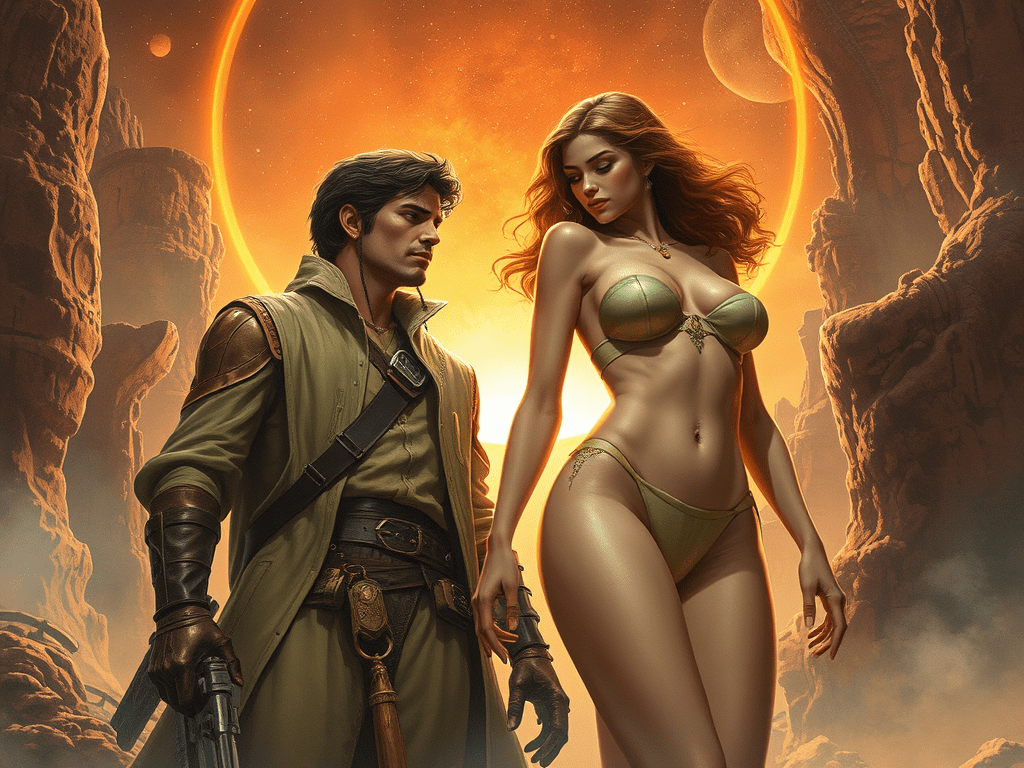
No guide to Gor would be complete without addressing the elephants in the room… The series is deeply controversial and has been for decades. By now you’ve gathered why: Gor depicts women as natural slaves and men as rightful masters in often explicit detail. Critics have not been shy in lambasting this as everything from misogynistic trash to dangerous incitement. Before you dive in or as you read, it’s helpful to separate myth from fact and understand how fans reconcile the fiction with reality.
Common Criticisms vs. What Fans/Context Say:
- “It’s just misogynistic porn!” – It’s true the novels sexualize the submission of women and contain a lot of BDSM fantasy. Critics like the Encyclopedia of Fantasy and authors like Moorcock have used words like “sadomasochistic pornography” . However, context matters. First, the books were written as provocative thought experiments by a philosophy professor – they are layered with social commentary (you’ll find pages of dialogue about evolution, honor, etc., which porn typically lacks!). Second, Norman’s intent was not to write throwaway titillation; he was challenging prevailing norms by proposing an extreme counter-model. One can disagree strongly with his model (many do) and still recognize that ideas are being explored. Fans often argue that calling it “porn” is an oversimplification – there are long stretches of complex plotting and world-building without any sexual content, and when sex or Master/slave scenes occur, they usually serve to illustrate a philosophical point or character development. As a new reader, you’ll probably still find some scenes gratuitous (they are meant to arouse on some level), but don’t be surprised to also find yourself pondering questions of human nature amid the more lurid parts.
- “Gor glorifies abuse and non-consent.” – On the surface, yes, Gor’s fictional society is non-consensual: slaves are taken by force, without choice. This is fantasy. Importantly, the books do not advocate doing this in the real world – quite the opposite, the author and the subculture repeatedly stress the difference between fiction and reality . A responsible Gorean lifestyler will tell you “consent is the bedrock; without it, you’re just a criminal, not a Master” . The novels portray a world where laws and morals differ – just as a grimdark fantasy might portray a world of constant war and murder without endorsing murder. Norman’s goal was partly to examine power in a setting unrestrained by modern ethics. That said, the depictions can be disturbing (kidnapping, conditioning, etc.). If those bother you, it’s valid to criticize the books. But it’s a leap to assume a reader of Gor or even a fan wants that for real. Many fans find the consensual version of such power exchange alluring and use the books as imaginative fodder, not as an exact script . As a newcomer, understand that enjoying the fantasy does not equate to endorsing actual slavery or abuse. The blog you’re reading here consistently emphasizes informed consent, adult choice, and mutual respect as non-negotiable in any Gorean-style arrangement in reality . The books are triggering for some, healing or thrilling for others – your mileage may vary, and that’s okay.
- “Gor says all women should be slaves – that’s hateful.” – This is a nuanced one. In the fictional setting, yes, Norman posits that the vast majority of women would be happier as slaves if societal veneer were stripped away . But he also includes free women characters (especially early on) who are respected. It’s more accurate to say Gor’s message is “all women are naturally submissive or at least crave male dominance, though not all will end up in a literal collar.” Modern practitioners interpret “slave” broadly – some women in the community identify as Kajira (slave) and live with a collar and full submission; others identify as Free Companions who are equals in public but privately defer to their companion. The key is voluntariness. Norman himself, in interviews, clarified he doesn’t think all real women should be collared; rather, he despised enforced egalitarianism. He felt society shouldn’t shame a woman who wants to be ultra-feminine or submissive, nor a man who wants to be overtly chivalric or dominant. In Gor’s world, he pushes it to an extreme to examine it. Certainly, this is ideologically opposite to feminist theory. As a reader, you can find it antiquated or offensive – many do – but within the story, remember it’s fantasy wish-fulfillment and allegory. The text even acknowledges not everyone fits the stereotype (“there are dominant women, submissive men, and everything in between” in real life, as one passage puts it ). The series’ core philosophy, when charitably viewed, is about embracing one’s authentic self – if a woman truly yearns to surrender to a worthy man, Gor says she should, proudly. If a man truly desires to lead and protect a woman, he should, honorably. It’s a romanticized ideal of complementarity. The controversy arises because Norman wraps that ideal in non-consensual trappings and absolutist language in the novels (for dramatic effect). When reading, it helps to separate “All women on Gor end up as slaves or in submission” (a world-building choice) from “All women on Earth should be slaves” (not a direct claim the books explicitly make – they imply many women are unfulfilled under Earth’s norms, but they don’t suggest launching slaving raids on Earth; the slavers in the story are aliens and Gorean renegades, after all!).
- “It’s a cult or encourages cult-like behavior.” – Because there have been real-life groups living as Goreans, sometimes in problematic ways (a few cases of abusive groups masquerading as Gorean “households” did hit news in the past), some worry the books recruit people into a dangerous lifestyle. The truth: Gorean lifestyle communities exist, but they are generally small, private, and comprised of consenting adults who adopt roles and rituals from the books in varying degrees. Like any BDSM or poly lifestyle, they can be healthy or unhealthy depending on the individuals. The books themselves are fiction and don’t contain any mystical doctrine or commands to the reader, so calling them a “cult manual” is a stretch. Modern Goreans often interact with the broader BDSM community and follow the same safety principles (Safe, Sane, Consensual, etc.) . The blog (House of Phoenix) and others work to educate newcomers about red flags – e.g., if someone online says “I’m a Gorean Master, you must obey me because the books say women are slaves,” that person is misusing Gor to justify abuse and should be avoided . In the novels, cult-like groups (e.g., the Kurii’s followers) are usually the villains, interestingly. The message is supposed to be about voluntary embracing of a role that feels right, not brainwashing. If you approach the series as philosophy-in-fiction, you can glean insights or at least interesting arguments without fearing it’s going to “convert” you unless you actively want to experiment with that lifestyle. Remember, reading about a fictional slave world doesn’t make you or anyone a mindless follower – readers can think critically and do. Many female readers of Gor actually enjoy the books while fully aware it’s fantasy, sometimes even because it’s taboo and doesn’t reflect their real-life desires (escapism is complex!). Many male readers take it as heroic fantasy with a BDSM edge, not a literal blueprint for how to treat every woman. The bottom line: don’t believe the extreme hype. Gor is neither pure evil nor pure gospel; it’s an exploration, and you’re free to take it, leave it, or remix it.
To any new reader concerned about how to reconcile liking parts of Gor with their moral compass, here’s some guidance: It’s possible – indeed common – to enjoy the Gor series as a provocative fantasy and still champion equality and respect in real life. These aren’t mutually exclusive. Liking the dynamic of a confident, protective man and a devoted, surrendering woman (which Gor cranks to 100) doesn’t mean you think less of women or want to strip anyone’s rights away. It might simply mean that power exchange presses certain emotional or sensual buttons for you. The key difference is choice. As this blog has stressed, a Gorean-style relationship in the real world is only ethical when chosen by all parties with full consent . The books give the fantasy of “no choice” because that heightens the drama and removes the ambiguity – but actual people always have a choice. Indeed, Norman’s own philosophical paradox is that he frames the most total submission as in some sense a woman’s ultimate choice of self-fulfillment . It’s a paradox and perhaps a rationalization, but it’s how many fans mentally separate the romance of it from real oppression.
So, if you decide to read Gor, do so with eyes open. You’ll encounter things that are objectionable – even fans agree some content is uncomfortable. But you’ll also find nuggets of wisdom or at least food for thought about honor, discipline, desire, and human nature. We encourage you to discuss what you read, question it, maybe even debate with fellow readers or within yourself: Is there any truth to the “natural order” idea, or is it just elaborate kink? What does the appeal of Gor say about society’s unspoken wants or discontents? Many intelligent discussions have arisen from these books (and yes, many flame wars too!). By grappling with the controversies instead of avoiding them, you might clarify your own values. And even if you conclude “Nah, I reject Norman’s view entirely,” you’ll have journeyed through a legendary piece of alternative sci-fi history and seen firsthand what the fuss was about.
Demystifying “Natural Order”: Perhaps the most central controversy is the claim that Gor’s ethos is just misogyny dressed up. We touched on this earlier via the blog’s explanation . To put it succinctly: Gorean “Natural Order” says if you are a man who feels meant to lead and protect, or a woman who feels happiest serving and yielding, you shouldn’t be shamed – that’s your nature and you can live it proudly . It does not say all men must dominate all women in all circumstances universally (though careless readings can take it that way). It’s descriptive for those who resonate with it, not prescriptive for everyone . The books exaggerate to make a point, but thoughtful readers understand nuance. As a newcomer, you might find you resonate with none, part, or all of that concept. Any reaction is fine. The goal here isn’t to convert you to a Gorean worldview; it’s to present it so you can examine it. If nothing else, reading Gor might make you appreciate how far society has come in terms of egalitarian values – or conversely, it might make you question if some modern norms ignore biological inclinations. It often does both for people.
In closing, tackling Gor is a bit like a journey to the wilds of Counter-Earth itself: you’ll see wonder, beauty, barbarism, and philosophy entwined. Nothing is quite politically correct in Gor, but that’s part of its raw power as a narrative setting. As this blog has shown in earlier series entries, one can draw positive, consensual lessons from Gor – about living with integrity, aligning words and actions, embracing clear roles in relationships, etc. – without endorsing the problematic extremes . The books themselves even encourage critical thinking; many characters question Gorean customs, only to reach their own conclusions. You are encouraged to do the same.
Happy reading, and remember: “We can critique the source while still finding value in what it awakens in us.” Gor, for all its fiction, ultimately asks each person to confront who they are and what they desire – and that introspection, approached ethically, is a treasure more valuable than gold on both Gor and Earth.
Sources & Further Exploration:
To ground the points made in this guide, here are references to relevant materials:
- Norman, John. Gorean Saga Novels 1–38. (1966–2024). – The primary texts themselves; each book mentioned above is by John Norman. Key thematic quotes and plot points were drawn from these novels.
- Wikipedia, “Gor – Plotlines” – overview of series plot arcs (mentions Ar/Cos conflict and Priest-Kings vs Kurii) .
- Wikipedia, “Gor – Reception” – summary of critical reception (notes from Encyclopedia of Fantasy and Moorcock’s quote) .
- Essay “The Rule Books of Gor?” by Ubar Luther (House of Runo, 2019) – provides historical groupings and notes on intensity changes (e.g., compares Captive vs Dancer content harshness) , and speculation on style changes post-2001 .
- Henrich, J. “The Puzzle of Monogamous Marriage,” Philosophical Transactions of the Royal Society B (2012) – notes anthropological stat that ~85% of societies permitted polygyny . Used to support the point on naturalness of polygyny in historical context.
By exploring these sources and, of course, the novels themselves, you’ll be well-equipped to understand and evaluate the Gor phenomenon. Whether you end up loving the saga, loathing it, or simply learning from it, you’ll have experienced a truly unique piece of speculative fiction – one that continues to spark debate and soul-searching long after the final page is turned. Enjoy your journey on Gor, and Tal! (That’s Gorean for “greetings” – or in this case, farewell and good fortune).
I wish you well!
©2026 – Written by Azrael Phoenix
- Follow on Facebook: GorByPhoenix
You can read the full set of articles of this Series here:
- Series 1 – Start Here: Understanding the Gorean Lifestyle
- Series 2 – The Philosophy: Values Behind the Gorean Lifestyle
- 2.a – Honor, Responsibility and Discipline: The Core of Gorean Philosophy
- 2.b – Freedom, Choice and Voluntary Surrender: A Paradox at the Heart of Gor
- 2.c – Strength and Vulnerability: The Gorean View of Masculinity and Femininity
- 2.d – Understanding Gorean Natural Order: Philosophy and Modern Life
- 2.e – Aligning Words and Actions in Gorean Life
- Series 3 – Practicing a Gorean-Inspired Lifestyle (Safely & Ethically)
- Series 4 – Reading Gor: Guides, Themes, and Character Studies
- 4.a – Where to Start with the Books of Gor
- Part 1 – A Reading Guide for Newcomers
- Part 2 – Saga in Stages: Phases of the Gorean Journey
- Stage 1 – The Early Adventures (Books 1–6): From Earthman to Gorean Warrior
- Stage 2 – Broadening Horizons & Deeper Themes (Books 7–13): New Perspectives on Gor
- Stage 3 – The Jason Marshall Trilogy (Books 14–16): A New Tale of Submission and Identity
- Stage 4 – War and Upheaval (Books 17–25): The Epic Gorean War and Turning Point
- Stage 5 – The Saga Resumes (Books 26–33): New Century, New Faces, and the Gorean Renaissance
- Stage 6 – Climactic Conclusions (Books 34–38): A New Resolve and the Future of Gor
- Part 3 – The Philosophy Behind the Fantasy: How Gor Evolved (and Why It’s Not Just “Erotic Pulp”)
- Part 4 – Major Pivotal Books & Moments in the Saga
- Part 5 – Where to Find the Gor Books (Legally and Easily)
- Part 6 – Confronting the Controversies: Misconceptions and Reality-Checks
- 4.a – Where to Start with the Books of Gor
Discover more from Gorean Lifestyle - House of Phoenix
Subscribe to get the latest posts sent to your email.
 Gorean Lifestyle - House of Phoenix
Pingback: Series 4.b – 10 Scenes That Shaped the Gorean Lifestyle Community (and Why) – Part 7: “I Was Gorean – I Was Male” – Tarl Cabot’s Epiphany of Masculine Identity – Gorean Lifestyle – House of Phoenix
Pingback: Series 4.b – 10 Scenes That Shaped the Gorean Lifestyle Community (and Why) – Part 6: Honor and Choice in Love: Two Women, Two Paths (Ar’s Court, Assassin of Gor) – Gorean Lifestyle – House of Phoenix
Pingback: Series 4.b – 10 Scenes That Shaped the Gorean Lifestyle Community (and Why) – Part 4: “La Kajira” — An Earth Woman’s First Surrender of Self – Gorean Lifestyle – House of Phoenix
Pingback: Series 4.b – 10 Scenes That Shaped the Gorean Lifestyle Community (and Why) – Part 3 – From Proud Beauty to Serving Slave – Aphris of Turia’s Surrender – Gorean Lifestyle – House of Phoenix
Pingback: Series 4.b – 10 Scenes That Shaped the Gorean Lifestyle Community (and Why) – Part 2 – The Fall of Tharna – When Natural Order Overturns a Matriarchy – Gorean Lifestyle – House of Phoenix
Pingback: Series 4.b – 10 Scenes That Shaped the Gorean Lifestyle Community (and Why) – Part 1 – The Home Stone of Port Kar – Loyalty and Belonging in Action – Gorean Lifestyle – House of Phoenix