Gorean Lifestyle - House of Phoenix
A view of the Gorean Lifestyle and Philosophy based on the Books
Tag: relationships
Gorean Consent: Surrender Only Counts If It Could Be Withheld

Surrender only has value because it could have been withheld. Why Gorean consent must stay informed and revocable, and why authority brings duty.
The Natural Order in Intimacy: Surrender That Is Offered
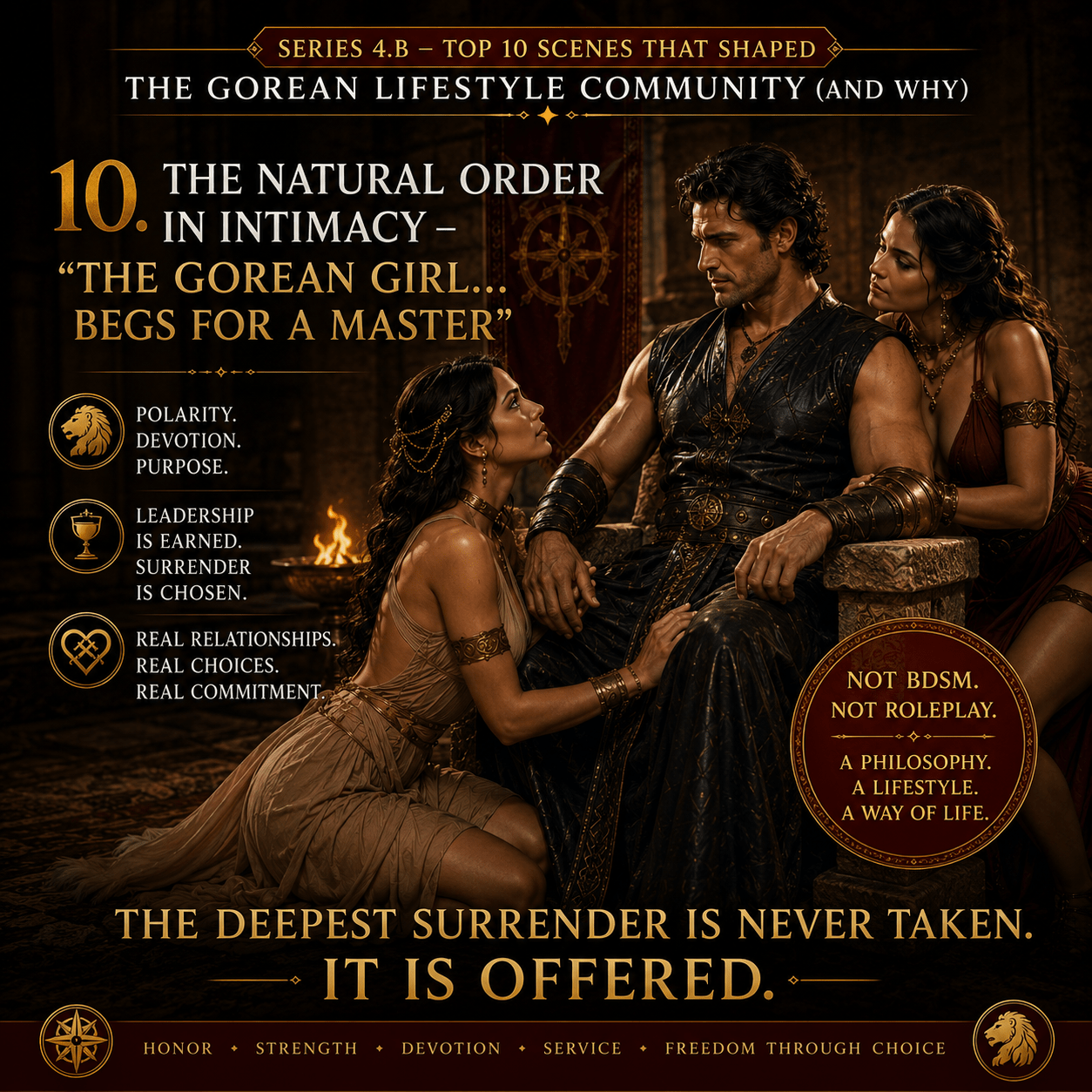
The last of the ten scenes: Natural Order in intimacy, and why the deepest surrender is never taken, only offered.
Gorean Aliveness: The Contrast with Earth Civilization

The ‘gray men’ of Nomads of Gor: Norman’s contrast between Gorean aliveness and the comfortable numbness of modern life.
On Earth There Are Many Males, But Few Men

‘Many males, but few men’: Gor’s contrast with Earth norms, and what a responsible, coherent masculinity looks like.
I Was Gorean, I Was Male: Tarl Cabot’s Epiphany

‘I was Gorean, I was male’: Tarl Cabot’s epiphany in Marauders of Gor and what it says about masculinity as integration.
Honor and Choice in Love: Two Women, Two Paths

Two women, two paths: the court scene in Assassin of Gor and what it teaches about honour, choice and honesty in love.
Bridging Fantasy and Reality in Gorean Relationships

How to bring Gorean ideals into a real relationship: what to keep from the books, what to leave in fiction, and how to tell the difference.
The Joy of Service: Why Serving Can Feel Like Freedom

Why serving can feel like freedom: the joy of service in Gorean life, and how to keep it dignified and freely given.
Emotional Safety in Gorean Dynamics: Limits and Aftercare

Emotional safety in Gorean dynamics: how to set limits, check in and give aftercare so that surrender stays healthy.
Building a Gorean Household: Structure That Works

How to build a Gorean household that works: roles, rules, rituals and communication for a consensual, well-ordered home.
Gorean Natural Order: What It Means in Modern Life

What Gorean Natural Order means, what it does not mean, and how consenting adults apply it in modern relationships.
Strength and Vulnerability: Gorean Masculinity and Femininity

The Gorean view of masculinity and femininity: strength and vulnerability as complementary forces, not as a ranking of worth.
Freedom, Choice and Voluntary Surrender: The Gorean Paradox

How can giving up freedom be an act of freedom? The Gorean paradox of voluntary surrender, and why choice is what gives it meaning.

