Gorean Lifestyle - House of Phoenix
A view of the Gorean Lifestyle and Philosophy based on the Books
Series 4.b – 10 Scenes That Shaped the Gorean Lifestyle Community (and Why) – Part 3 – From Proud Beauty to Serving Slave – Aphris of Turia’s Surrender

From Proud Beauty to Serving Slave – Aphris of Turia’s Surrender
Introduction
I remember the first time I read about Aphris of Turia – the transformation of this proud Gorean beauty into a devoted slave utterly captivated me. Her journey, from an aristocratic free woman luxuriating in pride to a woman who willingly submits herself at the feet of a man, epitomizes the dramatic “natural order” transformations in John Norman’s Gor series. In this third part of our series, I will delve deeply into Aphris’s surrender and draw parallels to other female characters in Gor who undergo similar upheavals in identity. Along the way, I’ll connect these fictional arcs to Gorean philosophy and even real-world perspectives: is it so unnatural for a woman to devote herself to one man, and for a man to have multiple devoted women? As we’ll see, Gorean literature unabashedly argues that such arrangements are rooted in nature – and modern science and history provide intriguing support for that claim. I write this as an individual deeply fascinated by Gorean lifestyle dynamics, hoping to demystify the “Natural Order” mindset and show that a chosen life of male dominance and female submission can be not only normal, but profoundly fulfilling for those who embrace it.
The Pride of Turia: Aphris’s Arrogant Beginnings
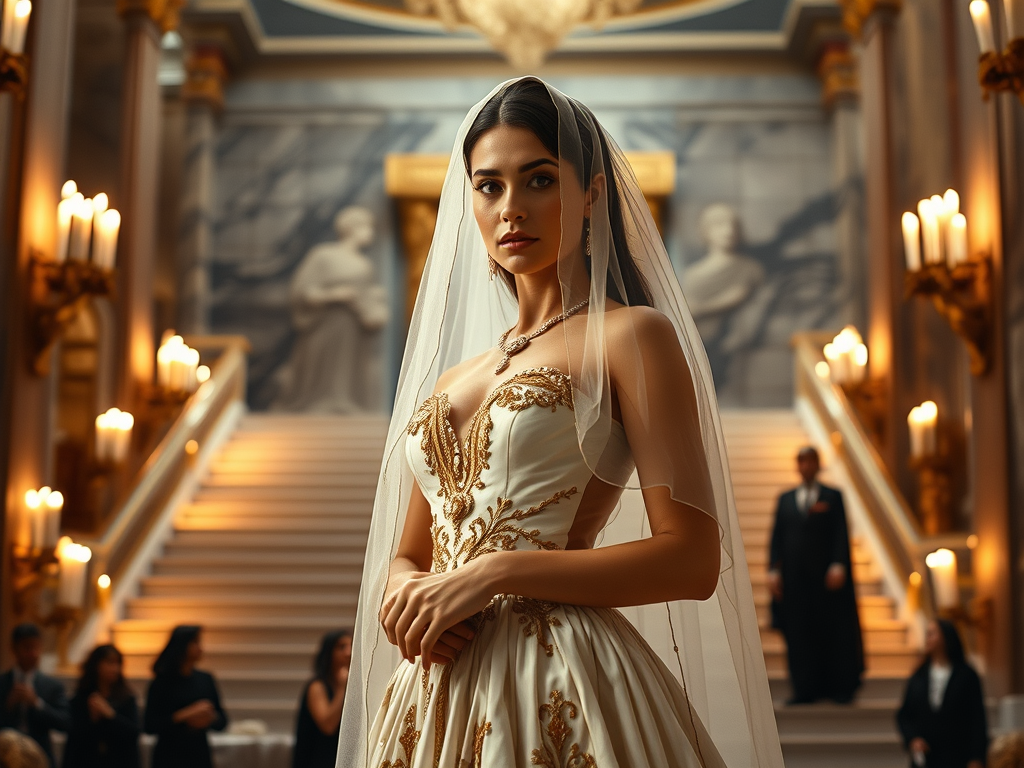
Aphris of Turia is introduced in Nomads of Gor as nothing less than the prized jewel of her city. She is the richest heiress of Turia and vaunted as its most beautiful woman . When we first meet her at a banquet, Aphris makes a grand, calculated entrance to ensure every eye is drawn to her splendid figure. Clad in opulent robes of pure white trimmed in gold, her face demurely veiled, she descends the stairs with regal deliberation – the very picture of haughty nobility . Despite the required modesty of a high-caste free woman, Aphris exudes vanity: she knows her beauty and status command attention. In true Turian fashion, she assumes the position of a Gorean Free Woman at the table, kneeling with back straight and head held high, a posture of dignified reserve . Every detail of her appearance and bearing proclaims pride, confidence, untouchability.
We soon learn just how prideful Aphris is. Kamchak of the Tuchuks (one of the Wagon Peoples of the plains) recalls an incident two years prior when he tried to court Aphris by gifting her an extravagant five-stranded diamond necklace. The young lady’s response? She spurned the gift and publicly insulted him. She claimed to have tossed the diamonds to one of her slaves, and she denounced Kamchak as a “Tuchuk sleen” (a harsh slur) for daring to present a present to her, the lofty Aphris . In Gorean culture, a free woman – especially one of Aphris’s wealth and station – might see a gift from a mere nomad as an affront. Aphris’s vanity was so great that she could not imagine lowering herself to accept anything from a man she deemed beneath her. This little backstory sets the stage: Aphris is spoiled, willful, and fiercely proud. She considers herself Kamchak’s social superior and treats him with open contempt. It’s precisely this arrogance that sows the seeds of her eventual fall.
Tricked and Collared at the Banquet

At Saphrar’s banquet in Turia, Aphris’s pride meets Kamchak’s cunning. The wily Tuchuk has not forgotten the insult of the diamond necklace. He arrives at the feast with a small mysterious box at his side. Aphris, curious as any woman, cannot let the box pass unnoticed. What treasure might it contain? Kamchak goads her interest, suggesting it holds a “trinket” she probably wouldn’t like. The more he demurs, the more her curiosity burns . Finally, when Kamchak hints the gift was meant for her, Aphris demands it. He only agrees on the condition that he be allowed to place it on her himself – a seemingly gallant gesture. So blinded by vanity and greed is Aphris that she consents without a second thought .
What follows is one of the most iconic “gotcha” moments in the saga. Aphris kneels before Kamchak, spine rigid and chin delicately lifted, prepared to receive what she assumes is some magnificent necklace . In that instant, Kamchak springs his trap:
What happened then was done very swiftly. Kamchak lifted from the box an object indeed intended to grace the throat of a girl. But it was a round metal ring, a Turian collar, the collar of a slave. There was a firm snap of the heavy lock in the back of the collar and the throat of Aphris of Turia had been encircled with slave steel!
The effect is instant and electrifying. Aphris, the exalted free lady of Turia, is collared – literally locked into the status of a slave. Gasps and cries fill the hall as Kamchak, not done with his audacity, then rips away her veil (exposing her face, a grave offense to a high-caste woman) and even steals a bold kiss from her startled lips . In a single breathless moment, Aphris’s untouchable dignity is shattered. Kamchak caps it off by flinging the furious woman over the low banquet table, sending her tumbling to the floor in a heap of silk and indignation .
The hall erupts in chaos. Aphris’s reaction is one of sheer outrage and panic. She scrambles to her knees, clawing in vain at the locked collar on her throat, as if she could physically tear it off with her gloved fingers . “Sleen! Sleen! Sleen!” she screams at Kamchak in helpless fury . Never has she suffered such humiliation. The sight of this proud woman on her knees, veil torn away, a slave collar fastened on her neck, is shocking to all – and deeply symbolic. Aphris’s pride has literally been collared.
Kamchak, meanwhile, is cool and mocking. He studies her and delivers a devastating remark: “Beneath your robes of white and gold, I smelled the body of a slave girl.” This statement cuts to the core of Gorean philosophy – the idea that no matter the outer trappings of modesty and pride, a woman’s slave nature can be sensed by a strong man. Kamchak implies that Aphris’s haughty exterior was hiding a natural submissiveness all along. (At this, Aphris only howls louder for someone – anyone – to kill the “Tuchuk sleen” who has done this to her.)
It’s worth noting how Aphris comports herself even amid the mortification of this moment. When she rises, veil torn and hair disarrayed, she still stands proudly. After Turian officials intervene and order the collar removed (Kamchak shrugs that he “forgot” the key, delaying them), Aphris gathers the shreds of dignity she can and walks away regally, head high. As she departs, Kamchak can’t resist commenting loudly, “To see her walk, one would hardly suspect that she wears the collar of a slave.” Aphris spins in rage, flashing eyes full of tears, and Kamchak only chuckles: “I meant only, little Aphris, that you wear your collar well.” . In other words, even in indignity, she has the poise of a natural slave – another twist of the verbal knife. Aphris’s response is to cry out in frustration and flee, hands jerking at the hated band of steel fastened about her throat .
This banquet scene is a masterful turning point. In Gorean terms, Aphris has been shown her place. All her wealth and station could not stop a man determined to prove her a “mere” woman who can be bound. The psychological impact on her is enormous: for the first time, Aphris experiences the helplessness of the collar. The proud “free companion” side of her is in agony – but another side (the latent “slave girl” within, as Kamchak suggests) has been awakened. Aphris’s story will hinge on which side ultimately triumphs.
Pride on the Line: The Love War Challenge

Humiliated as she is, Aphris’s pride does not allow her to simply slink away and lick her wounds. Instead, she does something drastic: she stakes her very freedom on a challenge of honor. When Kamchak faces an uproar at the banquet (angry Turian men calling for his blood), he invokes his right as an ambassador to avoid immediate retribution. But Turia’s champion warrior, Kamras, spits with rage and challenges Kamchak to a formal duel. Kamchak, surprisingly, refuses to fight – asking coolly, “Why should I fight? What is to be gained?” . It’s a calculated bait. The implication is he has nothing to win by dueling… unless something or someone valuable is put at stake.
That’s when Aphris, still collared and livid, makes a fateful move. In front of the whole assembly she cries out: “Yes! If you will meet Kamras, Champion of Turia, I, Aphris of Turia, will stand at the stake in Love War!” . This is essentially a declaration that she herself will be the prize of the contest. It’s an incredibly rash offer – effectively saying, “Fight him, and if you win, I’ll be your spoil.” Aphris is so enraged and desperate to salvage her honor that she volunteers to risk becoming Kamchak’s slave permanently by the rules of the Love War games.
Kamchak’s eyes light up at her outburst – exactly as he planned. With a satisfied grin he answers, “I will fight,” sealing the agreement . In that moment, Aphris’s own pride ensnares her. As observers note, the “wily Tuchuk” used Aphris’s pride against her, maneuvering her into offering herself by her own will . Even Saphrar, her guardian, realizes he’s been outfoxed. Though Saphrar initially tries to forbid her from standing in the Love War (hoping the scandal will blow over in time), Aphris begs him with tears to let her do it: “Unless you permit this, my honor will be forever stained.” . She cannot bear the thought of Turian society laughing at her as the woman who let a barbarian get away with collaring and kissing her. In Aphris’s culture, reputation is everything – and Kamchak’s trick made a mockery of hers. So she would sooner bet her very freedom on a duel’s outcome than live with that humiliation.
Finally, with Kamras’s insistence as well, Saphrar relents and permits Aphris to stand as a Love War stake . The terms are set: at the upcoming games, Kamras (Turia’s finest swordsman) will defend Aphris’s stake against Kamchak (the barbarian outsider). The winner takes the loser’s staked woman as slave. Aphris, by all expectation, should be quite safe – Kamras has never lost a duel, and the men of the Wagon Peoples are not even trained in swords. Indeed, when the rosters are announced at the start of the games, Aphris is assigned to the First Stake, meaning she is officially ranked the most beautiful woman on the Turian side . (One judge calls out, “First Stake – Aphris of Turia!” to great fanfare .) Her champion Kamras will face Kamchak in the grand duel, confident in victory. The Turian crowd delights in this scenario, certain that the “Tuchuk sleen” will get his comeuppance and that Aphris will be avenged .
Yet there is an unintended consequence already in motion: by agreeing to “stand at the stake,” Aphris has tacitly accepted the possibility that she could become Kamchak’s slave. She has effectively consented to the legitimacy of the Love War’s outcome. In Gorean culture, that’s binding: if Kamchak wins, Aphris’s fate as a slave will be sanctioned by the very codes of honor she invoked. This mixture of pride and honor culture propels Aphris toward her own surrender as inexorably as gravity. It’s both ironic and poetic that her desperate attempt to reclaim honor only ensnares her deeper in eventual slavery.
Conquest and Surrender: Aphris Becomes a Slave
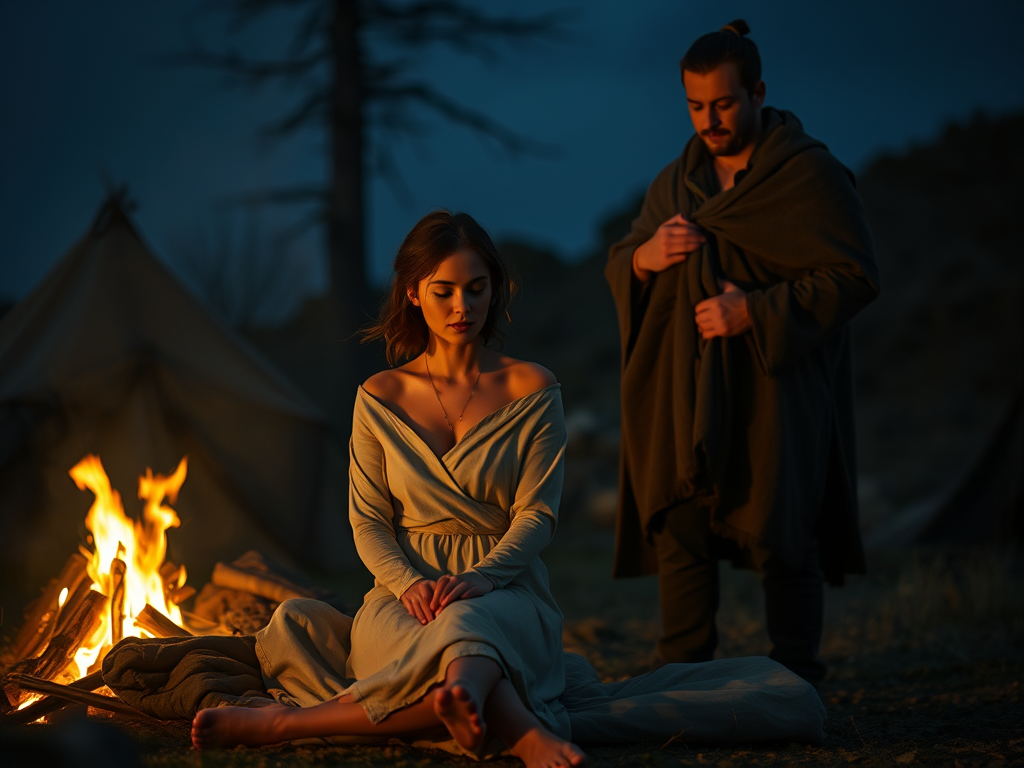
The Love War duel itself is thrilling. As expected, Kamras is a master of the blade while Kamchak initially feigns clumsy ineptitude with a sword (the Wagon Peoples prefer bows, lassos, and bolas in war). But it turns out Kamchak had a few secrets up his sleeve. He expertly tires Kamras out in a prolonged bout, then suddenly reveals he can handle a sword with deadly skill – he had in fact once served in Ar’s army and earned the rank of First Sword there in his youth . In a final flourish, Kamchak defeats Kamras. The “unbeatable” champion collapses from blood loss and exhaustion, and Turia’s hopes collapse with him . The outcome no one expected comes to pass: Kamchak wins Aphris of Turia. In full view of thousands at the Plains of a Thousand Stakes, the proud daughter of Turia becomes by law the property of a Tuchuk warrior.
Kamchak does not dally. Victorious, he carries Aphris off to his wagon as a slave . Imagine Aphris’s state of mind in this moment. One day ago she was a cosseted debutante with unimaginable wealth; now a fierce man throws her over his shoulder as chattel. All her riches, by Gorean law, are immediately signed over to her guardian Saphrar . She has lost everything but the clothes on her back – and likely she’ll lose those soon enough too, as Gorean slaves are not permitted the modest garments of free women. It’s a stunning reversal of fortune.
Initially, Aphris is surely in psychological shock and fury. Norman doesn’t detail every moment of her transport, but we know she ends up clad in the scant garb of a slave and kept in Kamchak’s wagon under his watch. The next phase of Aphris’s journey is the gradual softening of her will – the emotional transformation to match her new collar. The books tell us that in the days following, Aphris’s hatred begins to ebb and new feelings confuse her. She starts exhibiting the behavior of an “adoring slave,” her emotions swinging from defiance to longing . In short, Aphris falls in love with her captor. Kamchak, for all his bluffness, is a charismatic and powerful man, and we see even his stern heart warms with affection for the beautiful prize he has won . Despite teasing Tarl Cabot about having feelings for his own slave, Kamchak himself is clearly smitten with Aphris. The proud rider of the plains finds that possessing Aphris completely – owning her – is intensely satisfying to his male soul.
John Norman frequently describes this dynamic: when a woman who has long suppressed her submissive nature is finally conquered by a worthy man, she often discovers a deep fulfillment in surrender. Aphris’s storyline bears this out. Kamchak’s earlier taunt that he smelled “the body of a slave girl” beneath her silks was prescient – once Aphris’s pride is stripped away, her true needs as a woman surface. The Gorean view is that only in total submission can a woman experience love and passion to the fullest. As one quote from Hunters of Gor puts it: “The Goreans claim that in each woman there is a free companion, proud and beautiful… and in each, too, a slave girl. The companion seeks for her companion; the slave girl for her master. It is further said, that on the couch, the Gorean girl, whether slave or free… begs for a master.” . This is exactly Aphris’s arc – her “free companion” persona (noble, independent) gives way in intimacy to the primal “slave girl” within who begs for her master.
We see the culmination of Aphris’s transformation during the grand finale in Turia. After some wartime adventures (a Turian coup and a siege, during which Aphris is briefly stolen by another tribe and heroically bought back by Kamchak ), Kamchak becomes Ubar of all the Wagon Peoples. In the euphoria of victory, he offers Aphris her freedom. This is a crucial moment: Kamchak essentially says, “You are free. You may return home if you wish.” He gives her the choice he had promised – to release her from bondage now that honor is satisfied. How does Aphris respond?
Aphris refuses freedom. She kneels before him, lowers her head to his boot, and says, “No… I am Kamchak of the Tuchuks’.” She then timidly looks up, eyes filled with tears, and pleads, “Please, Master.” In that simple, trembling request is contained all the love and surrender in her heart. Aphris is effectively saying: I belong with you. I belong to you. When Kamchak, puzzled, asks why she would choose to stay a slave, Aphris actually smiles and answers with gentle humor: “I have grown fond of the smell of bosk.” (Bosk are the cattle-like animals the Wagon Peoples herd – their nomadic life literally smells of bosk and campfires. Aphris is saying she’s come to prefer the life she’s found with him over her old life of perfumes and city luxury.) This line always warms my heart – it shows Aphris not only accepts her new life, she cherishes it, earthy smells and all. It’s her way of telling Kamchak that she loves him and the world he’s shown her.
Kamchak’s response is as grand as it is moving. His face stern (though his voice is near breaking), he takes her by the hand and pulls her up onto his kaiila saddle. In front of all assembled, he declares: “This woman is called Aphris – know her – she is Ubara of the Tuchuks, she is Ubara Sana, of my heart Ubara Sana!” . “Ubara” is the word for the wife of a Ubar (a queen, in effect), and Ubara Sana translates roughly to “Little Ubara” or beloved Ubara. Kamchak is proclaiming that Aphris is his free companion (wife) and his queen, precious to his heart . In lifting her from slavery to companionship, he shows the highest form of love a Gorean man can give – yet notably, he only does this after she demonstrates absolute devotion. Aphris had to first embrace her role as “slave of the heart,” proving her willingness to belong to him utterly, before he raises her to stand by his side.
So the proud beauty of Turia surrenders, utterly and willingly. She remains monogamously devoted to Kamchak (indeed, she begs not to be sent away from him), and he, though Ubar, presumably will have other slaves but treasures Aphris as a first companion. They ride off together, Free Companions by choice, but only after experiencing the deep truths of the master-slave bond. Aphris’s story thus ends not tragically, but triumphantly: she finds her place in the “natural order” and gains both love and a grand role (Ubara of the united tribes). It’s a powerful affirmation of Gorean ideas about gender – ideas that, while fantastical in the novels, resonate with some real-world historical patterns and primal psychological leanings.
Other Proud Women of Gor Who Yielded

Aphris’s surrender is dramatic, but it’s far from unique in the Gorean chronicles. John Norman crafted many female characters who begin as proud, independent (even haughty) women and who eventually find fulfillment in submission. Let’s look at a few notable parallels:
- Sheila of Coroba (Guardsman of Gor) – Introduced as an arrogant, politically scheming noblewoman, Sheila is captured and put under the dominance of a mercenary captain. Initially she fights her captor with every fiber of her being. But as with Aphris, her resistance erodes under the steady assertion of her master’s will and desire. In an emotionally charged climax, Sheila not only submits – she begs for more. “You will be strong with me, will you not? You will make me do, and be, uncompromisingly, and as a slave, what you want, will you not?” she asks, desperate to be fully mastered . Finally, overcome by need, Sheila tearfully cries out: “Train me!… Train me, piteously, mercilessly, to your standards and pleasure!” . When her captor agrees, Sheila’s response is the tremulous, “Yes, Master,” spoken with relief and joy . This once-proud woman explicitly pleads to be made into the most perfect slave possible for her man. I found this scene incredibly telling – it lays bare the secret yearning that Gorean philosophy attributes to all women: to be so deeply claimed that there is nothing of themselves left unrealized. Sheila’s surrender is as complete as it is voluntary. By the novel’s end, she even says, “I am a slave, and I love it.” Her transformation closely mirrors Aphris’s, proving the point that under the right (or one might say wrong from a modern view!) circumstances, a proud female on Gor often chooses loving enslavement over freedom.
- Tarna (Raiders of Gor) – Tarna is a beautiful, proud deputy of the pirate Vosk League in Port Kar. Skilled with weapons and accustomed to giving men orders, Tarna meets her match when she is captured by Marlenus of Ar. In a pivotal scene, Marlenus forces Tarna to her knees at sword-point and orders her to submit. Tarna’s pride resists – she insists she is a free woman – but faced with the undeniable mastery of Marlenus, she eventually breaks. Not only does Tarna submit, she does so publicly, acknowledging herself a slave. Similar to Aphris’s humiliation at the banquet, Tarna’s moment of surrender strips away her former arrogance. While the exact quotes are lengthy, the gist is that Tarna, trembling and disarmed, is compelled to say the words “I am your slave girl” in front of onlookers, cementing her change in status. The proud warrior-woman is thus tamed, and we’re told she later serves devotedly at Marlenus’s feet. Tarna’s fall underscores a pattern: the stronger the woman’s initial pride, the more profound her submission once it’s awakened. Gor revels in these poetic ironies.
- Telima (Raiders of Gor) – Telima provides an interesting variant. She begins as a fierce marsh pirate (a so-called “panther girl” who had once enslaved Tarl Cabot himself!). Tarl turns the tables and makes Telima his slave, though later he frees her and she lives as a free companion for a time. However, circumstances force Telima back into captivity in Raiders of Gor, along with two other free women. At one point all three women, including Telima, are confronted by their master and they break down, openly admitting their slavery. “We acknowledge ourselves your slave girls!” Telima screams on behalf of them all. “If we do not please you, beat us or slay us!” (Raiders of Gor, p.244) . This dramatic declaration highlights how completely these once-independent women have been mastered; they are literally offering their lives to please the man who owns them. Telima’s journey (from masterful huntress to begging kajira) shows even a woman who once lived free and wild outside civilization can eventually embrace loving service to a man. In Telima’s case, she actually falls for Tarl and by the end of Raiders voluntarily remains his love slave.
- Elinor Brinton (Captive of Gor) – Elinor isn’t Gorean aristocracy but rather a wealthy, snooty Earth woman abducted to Gor. Initially, she is horrified by the very idea of slavery and considers herself far above any man on Gor. But after much tribulation in captivity, Elinor undergoes a profound internal change. She discovers in herself a need to submit and be found pleasing. By the end of her book, Elinor – once so prideful – begs to wear her master’s collar rather than be set free. Her famous realization encapsulates it: “I am a slave. Only a slave.” (Captive of Gor, p. ) She fully acknowledges that she’s happier and more herself in bondage than she ever was on Earth as a free woman. Her story, like many others, reinforces the Gorean assertion that “No woman knows truly what she is until she has worn the collar.” – in other words, only in submission does a woman discover the truth of her femininity. Elinor’s evolution from an entitled society girl to a passionate slave of Gor is another clear parallel to Aphris’s proud-to-submissive arc.
These examples (and there are more; e.g. Verna the panther girl, Lady Sabina of Ar, the former Tatrix of Tharna, etc.) all serve to illustrate Norman’s thematic point: in the Gorean universe, many women ultimately find their deepest fulfillment in yielding to male dominance. The initial “proud beauty” persona is often a mask of societal conditioning or personal fear, which is then stripped away to reveal the “natural slave” longing underneath. It’s a controversial idea, no doubt, but it’s presented in the novels as a kind of romantic freedom through surrender.
Notice also that these women, once they embrace submission, tend to become utterly devoted to one man. Aphris only wants Kamchak; Telima only wants Tarl; Sheila lives only for her captain; Elinor pines only for her chosen master. Gorean slaves may be bought and sold, but the narrative often focuses on the ideal of a love slave who, in her heart, is monogamously bonded to her one true Master. This resonates with the blog series’ subtle theme: that it feels natural for the woman to give all her love to a single man. The men, conversely, being masters, often can and do have multiple women – but usually one stands out as the special one (the Ubara or love slave) among them. This dynamic, interestingly, reflects a common pattern in human polygynous setups historically: the male may have several mates, but each female typically remains singularly attached to him. Let’s explore that “natural order” concept further, beyond the novels.
Gorean Philosophy: Nature’s Hierarchy of Male Mastery and Female Submission

To demystify Gor’s “Natural Order” mindset, we should examine the philosophy John Norman weaves through the books. In simple terms, Gor’s creed is that men and women are inherently different, with men naturally dominant and women naturally submissive. Far from seeing this as immoral, Goreans see it as beautiful and right. The fictional Goreans consider their ways closer to nature and truth than the societies of Earth, which they view as repressed and hypocritical.
One recurring idea in the books is that every woman has two aspects (as mentioned): the proud free self and the sensual slave self, and that ultimately the latter is deeper and more real. “Goreans, in their simplistic fashion, often contend, categorically, that man is naturally free and woman is naturally slave,” Norman writes. He admits it’s an oversimplification – Gorean free women do exist and command respect (indeed, “there is no higher person… than the Gorean free woman” ). However, Goreans believe every woman harbors a secret desire to meet her “natural master.” Norman continues: “Goreans do believe, however, that every woman has a natural master… She lives in terror that she might meet one in real life.” . That line encapsulates the paradox: A woman might fear the man strong enough to completely dominate her, yet something in her yearns for such a man.
In the world of Gor, many women do end up meeting a “natural master” – and when they do, the result is total surrender (after perhaps some requisite struggle to save face). We saw this with Aphris and Kamchak. Aphris deep down wanted a man strong enough to take absolute possession of her; her initial contempt for Kamchak turned to love precisely because he proved himself that man. There’s a telling Gorean proverb cited in the books: “Any woman who relishes a compliment is in her heart a slave girl.” – meaning that the desire to please a man and be validated by his approval is a sign of innate submissiveness. By this metric, nearly all women qualify, since who doesn’t enjoy being found beautiful by someone they admire? Gorean logic extends that to say, if a woman wants to be truly pleasing and fully possessed by a man, the most honest and natural state for her is literal slavery to him. In that state, “only a slave girl can truly belong to a man, can be truly his, in all ways, utterly, totally, completely his”.
This is admittedly extreme, but it’s the romanticized extreme the novels embrace. The Gorean slave isn’t depicted as a miserable chattel (unless with a cruel master, which Norman assures us is rare ); rather, she is exultant, living “a life wholly given over to love… a total life” with “no compromises” . In the Gorean view, the free woman’s life was full of compromises and pretense – the slave’s life is honest and complete. Aphris’s story reflects this: as a free woman she played societal roles (veiled, proper, aloof), but as a slave she could at last love openly, beg for her master’s touch, and experience her sexuality without restraint. It’s as though the collar unlocked her true self. We see her literally go from icy virgin noble to sensuous, affectionate lover once she’s owned. By the end, Aphris has never been happier, even though by Earth standards she’s lost her autonomy. This is exactly what Norman means when he has characters say things like: “In every woman there is a Free Companion… and a slave girl… and after she has tried all loves, she will beg for a master.” In the fictional context, being mastered by a worthy man is the pinnacle of a woman’s joy.
Goreans also argue that men need to be men – unencumbered by artificial notions of equality that, in their opinion, weaken natural male instincts. They revel in a hierarchy where men fight, lead, and dominate, and women yield, serve, and inspire devotion by their beauty and total love. This is not portrayed as exploitation but as a complementary fulfillment of each sex’s nature. One bold statement from Marauders of Gor contrasts Earth and Gor morals: “The Gorean morality… might be said to be a morality of masters. Guilt is almost unknown in Gorean morality… Many Earth moralities encourage resignation and accommodation; Gorean morality is bent more toward conquest and defiance… To these Earth moralities, the Gorean ethos might ask, ‘Why so soft?’” . Indeed, Gor is “hard” in its ethos – but the flipside is that it is, they claim, honest and natural. “In some respects the Goreans are, perhaps, cruel. Yet… in [Gor] men and women are alive… It is a world which I would not willingly surrender… in it there is good air.” . This quote from Slave Girl of Gor reflects the author’s suggestion that stripping away modern artificial constraints leads to a purer, more vital way of life (albeit a more dangerous one). Men are unapologetically masculine; women are joyously feminine.
It’s important to note that Gorean men adore women in their way. They are often fierce and strict with slaves, yes, but they also admire female beauty intensely (“the Gorean is extremely sensitive to beauty; it gladdens his heart” ) and they elevate the concept of the Free Companion (essentially a wife) to sacred status when it is earned. Gor isn’t about men hating women – it’s about men insisting women be fully women (feminine, desirable, yielding) and not trying to be men’s “equals” in ways they see as unnatural. A Gorean might say to an Earth woman: “On Earth, women try to be identical with men… Perhaps because there are few men.” – a barbed observation that much of feminism exists because Earth men have forgotten how to be strong males who inspire feminine surrender. In the presence of a true Gorean male, they claim, a woman wouldn’t want to be equal – she’d want to be his, utterly. That’s the natural order as they see it.
We can debate these ideas at length, but the takeaway for our purposes is that Aphris’s story is a perfect case study of Gorean “natural order” philosophy in action. A proud woman meets a powerful man; through conflict he masters her; in submission she finds love and freedom from her previous constraints; he in turn gains a loving companion devoted to making him happy. It’s portrayed as a win-win symbiosis, sanctioned by both biology and the universe’s will. Aphris goes from ornament of Turian society to cherished “Ubara of my heart” – but only after she becomes, for a time, a serving slave at Kamchak’s feet. Gor’s message is that there’s nothing shameful in this; on the contrary, it’s beautiful and natural.
Conclusion: Embracing the Natural Order – By Choice

Aphris of Turia’s surrender encapsulates so much of what the Gorean saga is about: the rediscovery of primal identities, the romance of absolute devotion, and the balance of power and love between men and women. From proud beauty to serving slave, Aphris finds where she belongs – at the side (and feet) of the man she loves, totally his. It’s a narrative that challenges modern egalitarian ideals, yes, but it appeals on a level of archetype and evolutionary memory that many readers (myself included) find undeniably intriguing and even stirring.
In writing about Aphris, and comparing her to others like Sheila, Tarna, Telima, and more, I notice a consistent message: when a woman chooses to yield to a worthy man, seeing it not as degradation but as coming home to her true nature, it can be a source of empowerment and joy, even if it requires effort from her part to control her conflicting instincts. Gorean philosophy calls this the “natural order” – and while we might not literally replicate Gor on Earth (no, I don’t advocate anyone kidnapping haughty debutantes and throwing collars on them! Consent is paramount in reality), we can take a kernel of wisdom from the stories. That kernel is an encouragement for individuals to discover what roles and dynamics genuinely fulfill them, free of societal guilt. If that means a woman naturally feels happiest being monogamous and utterly devoted to elevating one man – there is nothing wrong with that. In fact, many traditional and evolutionary psychologists would say that is a common female inclination. And if a man feels he naturally thrives having multiple female lovers or a very subservient partner, and can handle that responsibility with fairness and care, there’s nothing inherently evil in that either (provided no one is deceived or coerced).
The Gorean lifestyle, consensually applied, is one way some people pursue these tendencies. It’s extreme and not for everyone, but it works for some. And elements of it – male leadership, female submission, polygyny – have been part of human relations forever. Understanding this makes Gor less of a strange BDSM kink and more of a provocative exaggeration of real human mating strategies. Norman basically took timeless truths (“men like variety and control; women like security and strong men”) and spun a whole imaginative universe where those truths play out in grand operatic fashion.
As a reader and someone who enjoys exploring these ideas, I find nothing inherently “unnatural” about the Gorean natural order. Controversial, sure – it rubs against modern social norms. But looked at through the lenses of biology, history, and personal freedom, one can appreciate Gor’s perspective. Love, after all, can wear many faces. For Aphris, love meant submission. For Kamchak, love meant dominance (tempered by honor and affection). In the end they ride off together, both satisfied – she choosing to be owned, he respecting and adoring the treasure that is her surrender. “Amor vincit omnia,” the Latin phrase goes: Love conquers all. In Aphris’s case, love conquered her pride, and in Kamchak’s case, love conquered his loneliness.
If you’ve enjoyed this deep dive into Aphris of Turia’s saga, I encourage you to explore more of the Gor series and our blog’s other posts. Each character’s journey offers new angles on the Gorean lifestyle and philosophy. There is a rich trove of scientific and historical context we can connect to these stories – from discussions on pair-bonding and polygyny to dominance and submission psychology. In the next installments, we will continue examining other female characters’ paths (each with their own flavor of surrender) and peel back more layers of what John Norman called the “truths” of men and women. Whether you take Gor as literal inspiration, kinky allegory, or pure fantasy, it undeniably makes us reflect on what we truly want in our relationships. And if one message rings clear, it’s that there is no shame in embracing your nature – whatever that may be – and crafting your life and love in a way that feels authentically yours.
Tal (until next time)… and cheers to finding the beauty in your chosen surrender or dominance, should you seek it. Remember, as the Goreans say, freedom and fulfillment can take unexpected forms – sometimes even a steel collar and the words “Yes, Master” contain the sweetest liberation a woman can know. Aphris of Turia discovered that for herself, and her story continues to entice and inspire those of us drawn to the allure of the natural order on Gor.
I wish you well!
©2026 – Written by Azrael Phoenix
- Follow on Facebook: GorByPhoenix
You can read the full set of articles of this Series here:
- Series 1 – Start Here: Understanding the Gorean Lifestyle
- Series 2 – The Philosophy: Values Behind the Gorean Lifestyle
- 2.a – Honor, Responsibility and Discipline: The Core of Gorean Philosophy
- 2.b – Freedom, Choice and Voluntary Surrender: A Paradox at the Heart of Gor
- 2.c – Strength and Vulnerability: The Gorean View of Masculinity and Femininity
- 2.d – Understanding Gorean Natural Order: Philosophy and Modern Life
- 2.e – Aligning Words and Actions in Gorean Life
- Series 3 – Practicing a Gorean-Inspired Lifestyle (Safely & Ethically)
- Series 4 – Reading Gor: Guides, Themes, and Character Studies
- 4.a – Where to Start with the Books of Gor
- Part 1 – A Reading Guide for Newcomers
- Part 2 – Saga in Stages: Phases of the Gorean Journey
- Stage 1 – The Early Adventures (Books 1–6): From Earthman to Gorean Warrior
- Stage 2 – Broadening Horizons & Deeper Themes (Books 7–13): New Perspectives on Gor
- Stage 3 – The Jason Marshall Trilogy (Books 14–16): A New Tale of Submission and Identity
- Stage 4 – War and Upheaval (Books 17–25): The Epic Gorean War and Turning Point
- Stage 5 – The Saga Resumes (Books 26–33): New Century, New Faces, and the Gorean Renaissance
- Stage 6 – Climactic Conclusions (Books 34–38): A New Resolve and the Future of Gor
- Part 3 – The Philosophy Behind the Fantasy: How Gor Evolved (and Why It’s Not Just “Erotic Pulp”)
- Part 4 – Major Pivotal Books & Moments in the Saga
- Part 5 – Where to Find the Gor Books (Legally and Easily)
- Part 6 – Confronting the Controversies: Misconceptions and Reality-Checks
- 4.b – 10 Scenes That Shaped the Gorean Lifestyle Community (and Why)
- Part 1 – The Home Stone of Port Kar – Loyalty and Belonging in Action
- Part 2 – The Fall of Tharna – When Natural Order Overturns a Matriarchy
- 4.a – Where to Start with the Books of Gor
Discover more from Gorean Lifestyle - House of Phoenix
Subscribe to get the latest posts sent to your email.
 Gorean Lifestyle - House of Phoenix
Pingback: Series 4.b – 10 Scenes That Shaped the Gorean Lifestyle Community (and Why) – Part 7: “I Was Gorean – I Was Male” – Tarl Cabot’s Epiphany of Masculine Identity – Gorean Lifestyle – House of Phoenix
Pingback: Series 4.b – 10 Scenes That Shaped the Gorean Lifestyle Community (and Why) – Part 6: Honor and Choice in Love: Two Women, Two Paths (Ar’s Court, Assassin of Gor) – Gorean Lifestyle – House of Phoenix
Pingback: Series 4.b – 10 Scenes That Shaped the Gorean Lifestyle Community (and Why) – Part 4: “La Kajira” — An Earth Woman’s First Surrender of Self – Gorean Lifestyle – House of Phoenix