Gorean Lifestyle - House of Phoenix
A view of the Gorean Lifestyle and Philosophy based on the Books
Series 4.b – 10 Scenes That Shaped the Gorean Lifestyle Community (and Why) – Part 7: “I Was Gorean – I Was Male” – Tarl Cabot’s Epiphany of Masculine Identity
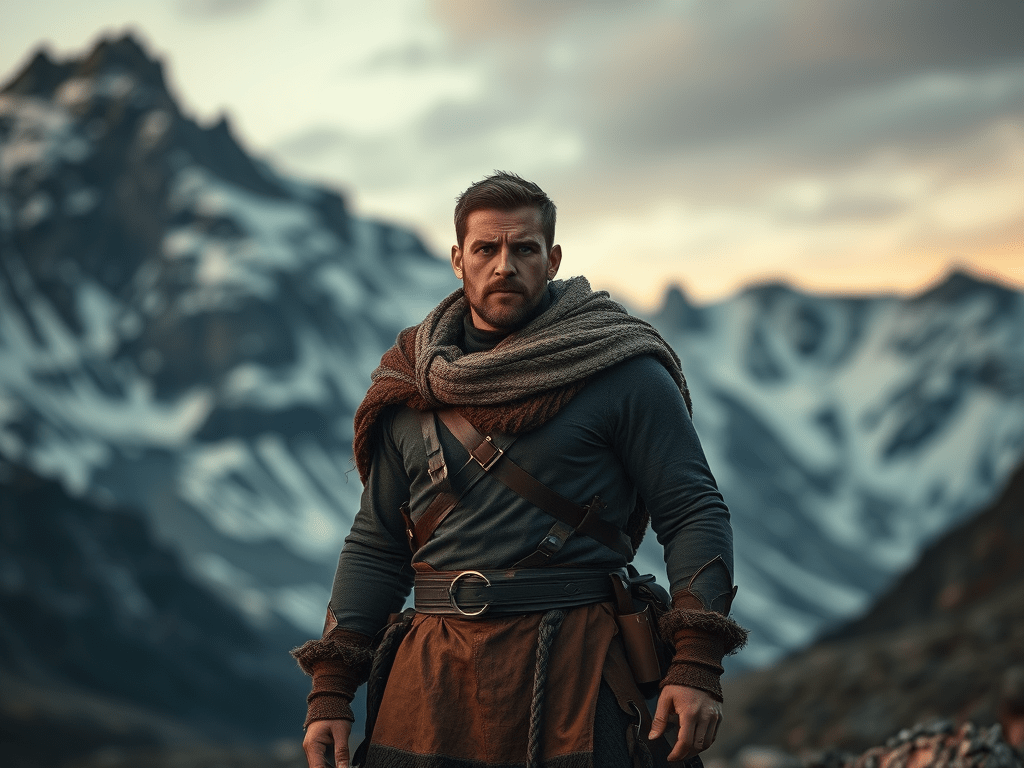
There are moments in the Gorean saga when John Norman stops merely telling a story and starts putting a philosophy under a spotlight.
For me, one of the clearest of those moments comes in Marauders of Gor. It is not a scene of seduction. It is not a scene of court politics. It is not even, at its core, a scene about women. It is a scene about a man discovering what he believes himself to be.

The line that matters is simple, blunt, and unforgettable:
“I had discovered what it was to be Gorean. I had discovered what it was, truly, to be male, to be a man. I was Gorean.”
That sentence has echoed through the Gorean lifestyle community for years because it touches a nerve that many men, whether they admit it openly or not, have felt at some point in their lives: the hunger not just to exist as male, but to feel integrated, grounded, and purposeful in one’s masculinity.
In this blog, and in the way I approach Gorean philosophy, I always take one point as non-negotiable: real-life dynamics must be consensual, informed, adult, and voluntarily chosen. Fiction may use force as a device. Real life does not get that luxury. So when I explore this scene, I am not defending coercion. I am examining why this moment of masculine recognition has been so important to readers who feel more fulfilled living deliberately, structurally, and—yes—sometimes traditionally.
1) The moment in Marauders of Gor: when identity stops being abstract
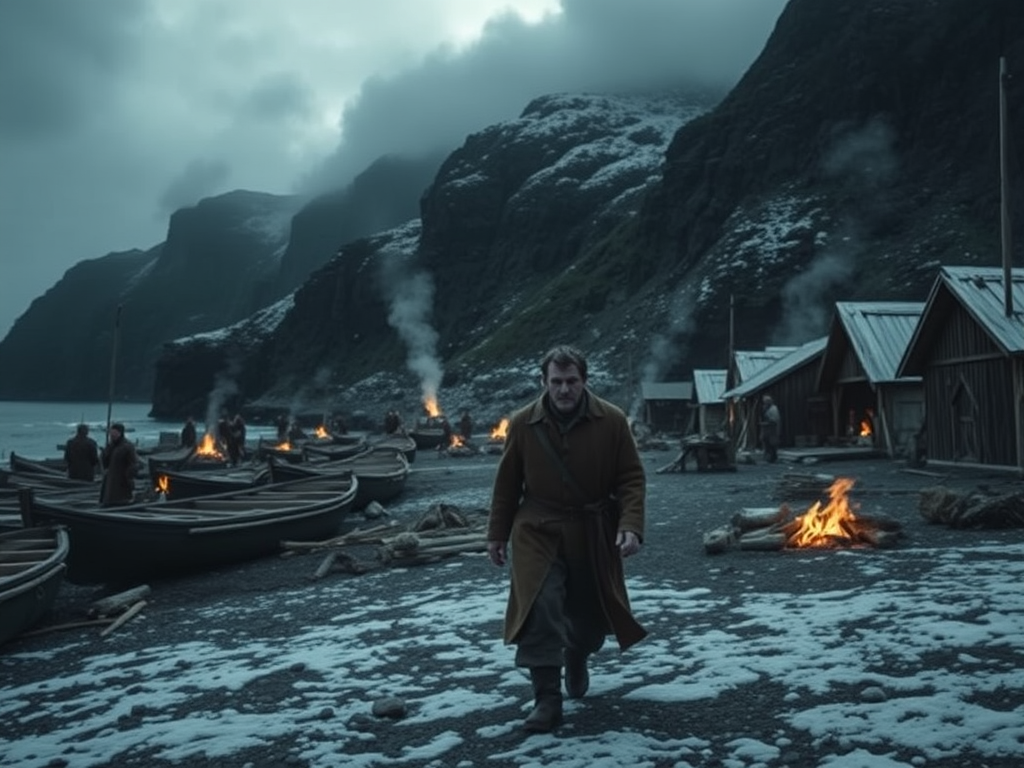
Marauders of Gor is the ninth novel in the saga. It was first published in 1975, and it places Tarl Cabot in the harsh northern world of Torvaldsland, among men whose culture is martial, direct, and deeply suspicious of weakness.
By the time the epiphany comes, Tarl is not merely visiting another culture. He is being measured by it. He is in a setting where courage, force, endurance, and decisiveness are not optional social accessories. They are the price of being taken seriously.
The line from the book is often cited in isolation, but it gains force when placed alongside Norman’s recurring contrast between the men of Earth and the men of Gor. On one Gorean quote compilation, the related lines are preserved this way:
“The men of Gor,” she said, “are strong. They are not weak and divided against themselves. They are not tortured. They are integrated and coherent, and proud.”
That is the real key word for me: coherent.
Tarl’s realization is not merely “I feel powerful.” It is closer to: I feel aligned. I feel unified. I feel that my body, instincts, duty, and identity are no longer pulling in opposite directions.
That is why this scene mattered so much to the lifestyle community. It gave language to something many male readers had felt but struggled to articulate.
2) Why the line lands so hard: masculinity as integration, not performance
A lot of modern discussion about masculinity swings between two extremes:
- masculinity as a problem to be suppressed, or
- masculinity as a cartoon to be performed.
The Tarl Cabot moment lands differently because it speaks to neither suppression nor performance. It speaks to integration.
That matters. Modern psychological theory repeatedly shows that people thrive when they experience a sense of autonomy, competence, and relatedness—in other words, when life feels self-directed, effective, and meaningfully connected. That is one of the central ideas in Self-Determination Theory, one of the most influential frameworks in contemporary motivation research.
Read that back into Tarl’s sentence and the appeal becomes clearer.
He is not saying:
- “I was louder.”
- “I was more aggressive.”
- “I was sexually successful.”
He is saying, in effect:
- I knew who I was.
- I acted from that place.
- I felt whole in doing so.
That is why this scene keeps resurfacing in Gorean discussion. It is not just about “male dominance.” It is about a particular experience of male coherence.
3) What kind of masculinity is actually being described?

If I strip away the rhetoric and ask myself what this moment is really describing, I get something like this:
- readiness to act,
- willingness to assume responsibility,
- comfort with strength,
- refusal of self-betrayal,
- and a desire to protect, lead, build, and claim.
That does not automatically make it healthy. Strength without ethics becomes tyranny. Confidence without restraint becomes recklessness. Leadership without care becomes vanity.
And this is where I think many shallow readings of Gor fail. The books absolutely contain brutalities and excesses. But the passage that made men feel seen was not, fundamentally, about casual cruelty. It was about the relief of not being divided against oneself.
That distinction matters even more now. Some current psychological literature warns that rigid or punitive masculinity norms can harm men’s mental health, particularly when they demand emotional suppression or impossible standards.
I agree with that warning.
But that is not the same as saying all “traditional” masculine instincts are harmful. It is one thing to criticize rigidity, shame, and emotional illiteracy. It is another to deny that many men genuinely feel more alive when they are allowed to be decisive, strong, protective, and sexually polarized in their intimate relationships.
Tarl’s line matters because it points to the second truth without requiring the first error.
4) Why this scene shaped the lifestyle community
The community took hold of this moment because it offered a male counterpart to scenes like “La Kajira.”
If “La Kajira” is about the threshold of named feminine surrender, this passage is about the threshold of named masculine identity.
That pairing is important.
A Gorean dynamic, at least in its philosophical ideal, is not just:
- a woman becoming more surrendered, while the man stays vague and indulgent.
It is also:
- a man becoming more deliberate, more accountable, more anchored.
That is why so many men in lifestyle circles found this line meaningful. It implied that if a man expects devotion, he must first become the sort of man for whom devotion makes sense.
Not louder.
Not more theatrical.
More worthy.
That is also why many women who are drawn to structured, male-led dynamics do not simply want any dominant personality. They want a man whose power feels settled, whose leadership reduces chaos rather than increasing it.
Some evolutionary and social psychology research gives this at least partial support. Studies indicate that upper-body strength and physical formidability are meaningful social cues, and that observers often use male strength as a cue of status.
Other research suggests women can be attentive to male status cues in mate evaluation, though that obviously does not reduce attraction to status alone.
That does not prove “Gor is right.”
But it does help explain why the fantasy feels psychologically legible to many readers.
5) “I was male” does not mean “I owned others”
This is an important correction.
One of the laziest ways to read this scene is to equate masculinity with possession alone.
That misses the actual shape of the epiphany.
Tarl’s realization is inward before it is outward. He recognizes a mode of being before he exercises it in relationship. In my view, that is exactly how a healthy, modern reading should work.
A man should not begin with:
- “How do I get obedience?” He should begin with:
- “Am I coherent?”
- “Am I disciplined?”
- “Do I tell the truth?”
- “Can I carry responsibility?”
- “Do people around me become steadier or more anxious because of my presence?”
That is the masculine question that matters.
A consensual power exchange dynamic can absolutely help some adults flourish. But the ethical order is clear:
- character,
- clarity,
- consent,
- structure.
Not the other way around.
6) Real-life translation: how adults can pursue this without turning it into parody

If someone reads this scene and feels recognized by it, the healthy modern question is not, “How do I imitate Tarl Cabot?”
It is, “What does this teach me about how I want to live?”
For men, a grounded adaptation might look like:
- developing physical competence,
- speaking more clearly,
- taking responsibility for decisions,
- following through on commitments,
- becoming calmer under pressure,
- and building a household culture that feels secure and ordered.
For women drawn to male-led structure, the corresponding question is not “How do I disappear?” but “In what kind of structure do I feel safest, most feminine, most relaxed, and most able to give deeply?”
That is where consensual Gorean-inspired living becomes real: not in costume, but in pattern.
I have seen versions of this work well when couples:
- negotiate roles explicitly,
- define authority carefully,
- review what is and is not consensual,
- and keep communication strong enough that devotion never becomes fear.
A relationship can be highly polarized and still emotionally healthy—if it is informed, chosen, and mutually strengthening.
7) A grounded note on “Natural Order”
At its best, “Natural Order” is not a magic law. It is an interpretive framework for people who genuinely experience sexual polarity and role asymmetry as deeply fulfilling.
Some men feel hollow in permanently negotiated egalitarian ambiguity.
Some women feel exhausted by always being “one more equal executive” even in intimacy.
Some couples flourish when one leads and one yields.
There is nothing automatically wrong with that.
There is also nothing automatically right about it for everyone.
That is why consent matters so much. The moment you remove real choice, “natural” becomes an excuse. And excuses are the enemy of honor.
So my position is simple:
- Traditional instincts are not shameful.
- Dominance and submission can be deeply fulfilling.
- But adult fulfillment must be built on informed willingness, not ideology alone.
8) Why this scene still matters to men now

I think this line survives because many modern men feel one of two pains:
- either they have been taught to distrust their own masculine instincts,
- or they have mistaken masculinity for swagger, appetite, and noise.
Tarl’s epiphany offers a third possibility:
masculinity as grounded certainty.
Not certainty that one must dominate others.
Certainty that one can stop apologizing for being strong, directional, and responsible.
And for couples who freely choose a power-structured life, that certainty becomes the foundation on which trust can rest.
Because no woman truly relaxes into devotion to chaos.
No healthy surrender flowers under confusion.
No lasting household is built on improvisation alone.
The masculine identity that matters is the one capable of carrying weight.
9) My conclusion: the line that gave many men permission to become whole

“I was Gorean – I was male” shaped the lifestyle community because it gave men permission to think of masculinity as something more than biology and more than performance.
It suggested that manhood could be:
- chosen,
- built,
- disciplined,
- and lived with integrity.
That is why the line stayed alive.
Not because it was crude.
Because it was clarifying.
And in a world where many people feel psychically fragmented, clarity is intoxicating.
If you read this scene only as dominance, you miss it.
If you read it as coherence, responsibility, and conscious masculine identity, it opens up.
That is how I read it.
And that is why I think it still matters.
Relevant links from your series
For readers moving through this series and wanting the broader frame, these earlier posts connect directly to this one:
- Series 2.7 — Strength and Vulnerability: The Gorean View of Masculinity and Femininity
- Series 2.8 — Understanding Gorean Natural Order: Philosophy and Modern Life
- Series 2.9 — Aligning Words and Actions in Gorean Life
- Series 3.14 — Integrating Gorean Values Into a Vanilla Public Life
- Series 4.b Part 4 — “La Kajira” – An Earth Woman’s First Surrender of Self
I wish you well!
©2026 – Written by Azrael Phoenix
- Follow on Facebook: GorByPhoenix
You can read the full set of articles of this Series here:
- Series 1 – Start Here: Understanding the Gorean Lifestyle
- Series 2 – The Philosophy: Values Behind the Gorean Lifestyle
- 2.a – Honor, Responsibility and Discipline: The Core of Gorean Philosophy
- 2.b – Freedom, Choice and Voluntary Surrender: A Paradox at the Heart of Gor
- 2.c – Strength and Vulnerability: The Gorean View of Masculinity and Femininity
- 2.d – Understanding Gorean Natural Order: Philosophy and Modern Life
- 2.e – Aligning Words and Actions in Gorean Life
- Series 3 – Practicing a Gorean-Inspired Lifestyle (Safely & Ethically)
- Series 4 – Reading Gor: Guides, Themes, and Character Studies
- 4.a – Where to Start with the Books of Gor
- Part 1 – A Reading Guide for Newcomers
- Part 2 – Saga in Stages: Phases of the Gorean Journey
- Stage 1 – The Early Adventures (Books 1–6): From Earthman to Gorean Warrior
- Stage 2 – Broadening Horizons & Deeper Themes (Books 7–13): New Perspectives on Gor
- Stage 3 – The Jason Marshall Trilogy (Books 14–16): A New Tale of Submission and Identity
- Stage 4 – War and Upheaval (Books 17–25): The Epic Gorean War and Turning Point
- Stage 5 – The Saga Resumes (Books 26–33): New Century, New Faces, and the Gorean Renaissance
- Stage 6 – Climactic Conclusions (Books 34–38): A New Resolve and the Future of Gor
- Part 3 – The Philosophy Behind the Fantasy: How Gor Evolved (and Why It’s Not Just “Erotic Pulp”)
- Part 4 – Major Pivotal Books & Moments in the Saga
- Part 5 – Where to Find the Gor Books (Legally and Easily)
- Part 6 – Confronting the Controversies: Misconceptions and Reality-Checks
- 4.b – 10 Scenes That Shaped the Gorean Lifestyle Community (and Why)
- Part 1 – The Home Stone of Port Kar – Loyalty and Belonging in Action
- Part 2 – The Fall of Tharna – When Natural Order Overturns a Matriarchy
- Part 3 – From Proud Beauty to Serving Slave – Aphris of Turia’s Surrender
- Part 4 – “La Kajira” — An Earth Woman’s First Surrender of Self
- Part 5 – The Ritual of Serving Wine – The Joy and Dignity of Service
- Part 6 – Honor and Choice in Love: Two Women, Two Paths
- Part 7 – “I Was Gorean – I Was Male” – Tarl Cabot’s Epiphany of Masculine Identity
- 4.a – Where to Start with the Books of Gor
Discover more from Gorean Lifestyle - House of Phoenix
Subscribe to get the latest posts sent to your email.
 Gorean Lifestyle - House of Phoenix
Pingback: Series 4.b – 10 Scenes That Shaped the Gorean Lifestyle Community (and Why) – Part 8: On Earth, There Are Many Males – But Few Men – Gorean Lifestyle – House of Phoenix