Gorean Lifestyle - House of Phoenix
A view of the Gorean Lifestyle and Philosophy based on the Books
Series 4.b – 10 Scenes That Shaped the Gorean Lifestyle Community (and Why) – Part 8: On Earth, There Are Many Males – But Few Men

Gor’s Contrast with Earth Norms
There are Gorean lines that function almost like a blade: short, sharp, and impossible to ignore. For me, one of the clearest is Tarl Cabot’s reflection that on Earth there are “many males, but few men.” It endures because it does more than criticize modern culture. It names a split that many readers instantly recognize: the difference between being biologically male and being integrated, grounded, and responsible in one’s masculinity. Gorean readers have returned to this idea for decades because it captures a hunger that still feels contemporary.
In this blog, and in the way I interpret Gorean philosophy, one point remains non-negotiable: real-life dynamics must be informed, adult, voluntary, and consensual. Fiction can use coercion as narrative machinery. Real life cannot. So when I explore this contrast between Earth and Gor, I am not defending force. I am examining why so many readers felt seen by the Gorean argument that many modern people are divided against their own instincts, their own polarity, and their own desire for structure. That reading becomes far more interesting when brought into conversation with modern psychology, relationship research, and social reality.
1) The quote and the contrast: what Tarl is really saying

The line usually appears alongside another revealing passage about the men of Gor: they are described as “integrated and coherent, and proud.” That pairing matters. The contrast is not merely between “strong men” and “weak men.” It is between men who feel internally aligned and men who feel fractured—pulled between instinct, guilt, performance, and confusion.
That is why I think this passage shaped the Gorean lifestyle community so deeply. It gives a vocabulary to something many male readers felt but did not know how to phrase: I do not only want permission to be male; I want to feel whole in it. The appeal of Gor, for many men, has never been simple aggression. It has been the fantasy—or aspiration—of coherence: clear purpose, accepted strength, responsibility without apology, and a world in which masculine direction is not automatically treated as suspect.
2) Why this landed so hard in lifestyle circles
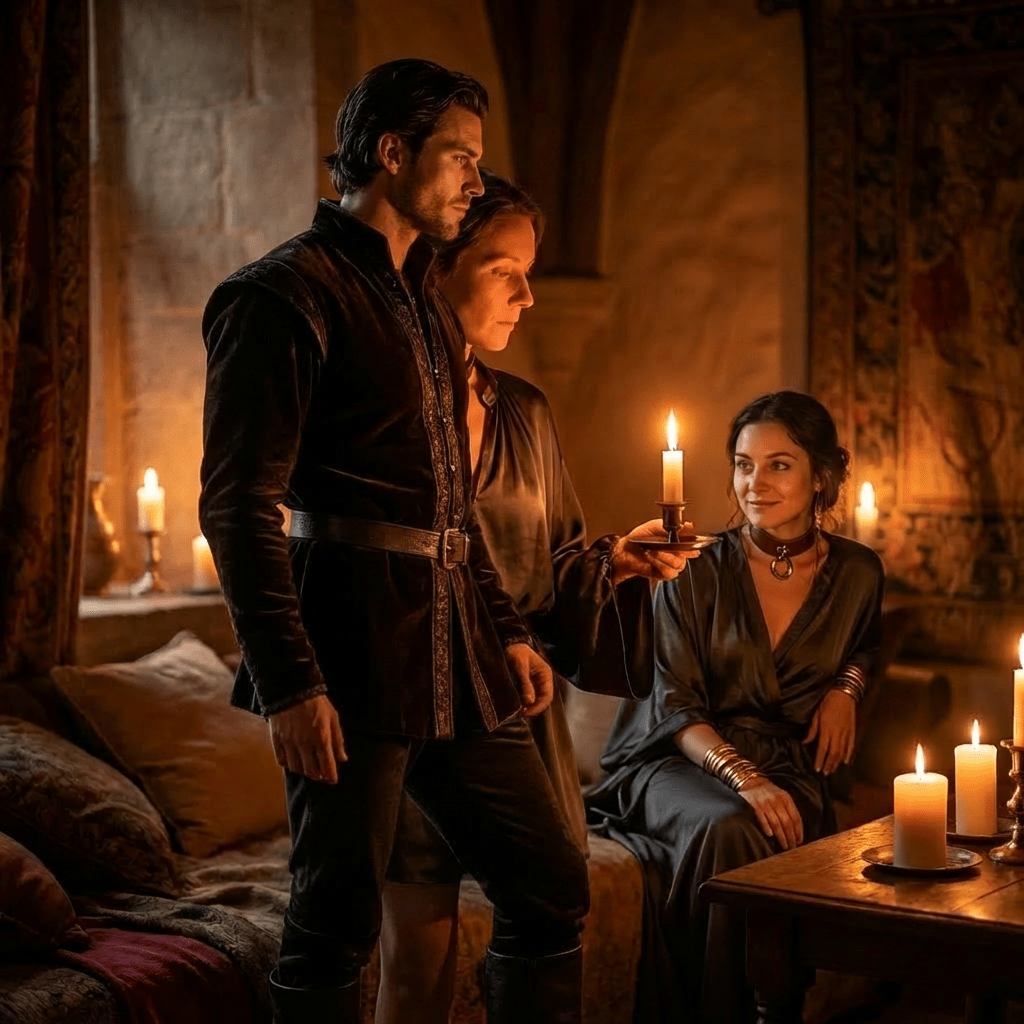
A lot of modern discourse reduces masculinity to one of two bad options: either something to be softened into harmless neutrality, or something theatrical and loud. The Gorean contrast rejects both. It presents masculinity as integration: the body, the will, the role, the word, and the duty all moving in the same direction. That is a powerful fantasy because it is also a powerful psychological need. Self-Determination Theory, one of the most influential models in modern motivation research, argues that people thrive when they experience autonomy, competence, and relatedness. A man who feels coherent in his masculinity often feels exactly that: self-directed, effective, and meaningfully anchored.
That is why a thoughtful Gorean reading matters. The point is not to revive a brittle caricature of masculinity. The point is to ask whether a man can be strong without being closed, decisive without being cruel, and leading without being emotionally illiterate. If the answer is yes, then the appeal of this Gorean contrast becomes easier to understand.
3) “Few men”: the Gorean standard is responsibility, not swagger
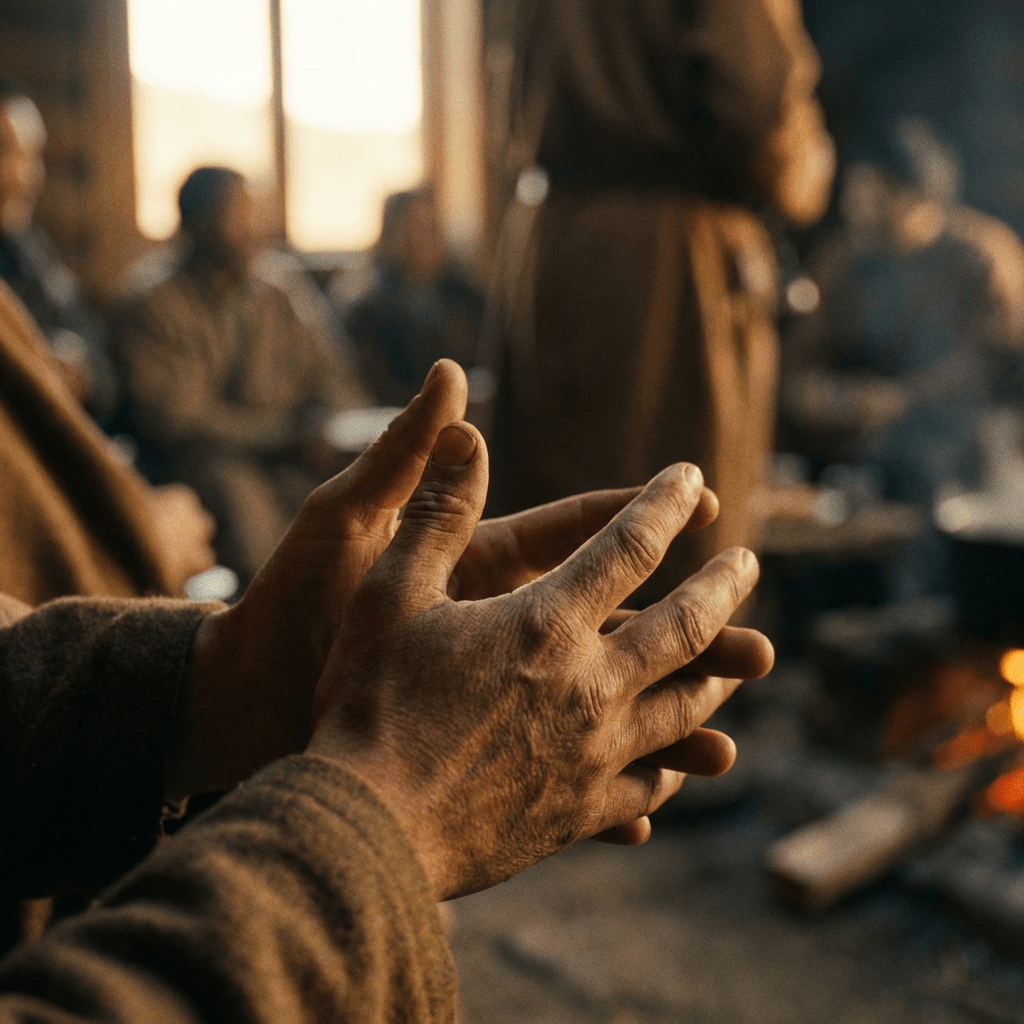
When I strip away the drama, I think Norman’s deeper claim is this: a man is not defined by appetite alone. He is defined by what he can carry. Can he carry pressure? Can he carry leadership? Can he carry the consequences of his word? Can he carry the emotional and practical burden of being the center of a household or the anchor of a relationship?
This is one reason the Gorean male ideal remains appealing even to readers who would never identify as “Gorean” in a literal sense. It is not primarily about domination for its own sake. It is about direction. That is why this passage belongs beside Tarl’s later realization in Marauders of Gor that to be Gorean is to feel male in an integrated way. The novels repeatedly connect masculinity with coherence, pride, and public responsibility.
Modern research provides some interesting supporting context here. Studies suggest that cues of male strength and status do affect social perception, and that observers often use physical formidability as one cue among others when assessing male dominance or rank. That does not mean women simply “want muscles.” It means that human beings, at a very old level, still read capability and formidability as meaningful signals.
This helps explain why some readers find the Earth/Gor contrast viscerally persuasive. It feels as though Gor grants legitimacy to qualities that modern life often asks men to blur out: firmness, direction, protective instinct, contained aggression, and the desire to build an ordered world around oneself.
4) Gor’s critique of Earth norms
The Gorean critique of Earth is not subtle. It suggests that Earth often confuses civilization with softness, and morality with the refusal to exercise strength. That is provocative, but it becomes more interesting when reframed psychologically: perhaps the real target is not kindness, but disintegration.
I think that is why the quote “many males, but few men” continues to circulate. It captures a modern anxiety that large numbers of men feel socially tolerated only when they are either docile or ironic—never fully serious in their masculinity. This does not mean all modern norms are bad. It does mean the Gorean texts touch a live question: what happens when a culture loses a compelling positive model of manhood?
Some contemporary research on masculinity and mental health suggests that men do struggle when the available scripts are contradictory. On the one hand, many are still judged by competence, strength, and confidence. On the other, many fear that inhabiting those traits openly will be read as threatening or regressive. That double bind can produce exactly the split the Gorean texts dramatize.
To me, the value of the Gorean contrast is not that it gives the final answer. It is that it asks the right question with unusual force: what would a culturally healthy masculinity look like if it were not ashamed of itself?
5) A consent-based modern reading: strength without coercion
Because this blog takes consent seriously, I always need to translate the books carefully. In fiction, Gorean men often act first and justify later. In real life, that is a path to harm.
A healthy modern adaptation of the “few men” ideal would not begin with “How do I control others?” It would begin with:
- How do I become more coherent?
- How do I speak more clearly?
- How do I become more dependable under stress?
- How do I hold authority without becoming arbitrary?
- How do I create safety rather than fear?
That last point is especially important for male-led relationships. Some women do find deeply fulfilling relationships in structures where the man leads and the woman yields in chosen ways. There is nothing automatically pathological about that. A consensual power exchange dynamic can absolutely help some adults become better versions of themselves. But the moral legitimacy of that structure depends on the man’s capacity for steadiness, care, and responsibility. Without that, the language of “Natural Order” quickly degrades into excuse.
So when I say a lot of readers are drawn to Tarl’s critique because they want to feel “like men,” I do not mean they want license. I mean they want clarity.
6) “Natural Order” without mystification
I think “Natural Order” becomes clearer the moment we stop treating it like a mystical decree and start treating it like a relational pattern that some people experience as profoundly right for them.
Some men feel most fulfilled when they are:
- directing,
- protecting,
- deciding,
- and carrying weight.
Some women feel most fulfilled when they are:
- trusting,
- yielding,
- supporting,
- and devoting themselves deeply inside a stable masculine frame.
That is not every person. But it is enough people that the pattern deserves to be discussed without automatic ridicule.
Research cannot prove a single “natural” relationship template for all humanity, because human mating systems have always been variable. But it can show that relationship preferences are not culturally random. Across both evolutionary and social research, cues of male status, strength, and reliability matter in mate perception, while long-term social structures vary between monogamous and consensually non-monogamous forms depending on cultural context.
That is why I do not think there is anything inherently wrong in adults consciously choosing a more traditional, male-led structure if it genuinely helps them flourish. What matters is that it is chosen, ethical, and sustaining.
7) A careful note on multi-partner structures and jealousy
Consensual non-monogamy is more visible, more studied, and more openly discussed now than it was even a decade ago. Research and recent reviews suggest that consensually non-monogamous relationships can be as functional and satisfying as monogamous ones, provided communication, sexual health practices, and emotional management are strong.
One 2026 article on how people maintain consensual non-monogamy identified recurring practices such as open communication about jealousy, thoughtful resource distribution, and what many call compersion—finding some degree of comfort or even positive meaning in a partner’s other relationships.
That matters because if a man wants to place himself at the center of a multi-partner structure, his burden increases dramatically. He has to be more—not less—disciplined. Jealousy in these structures is not solved by rhetoric. It is managed by:
- explicit agreements,
- fair time and attention,
- emotional reassurance,
- truthful disclosure,
- and consistent leadership.
If I apply that to a Gorean frame, I would say it this way: a man does not prove he is “more of a man” by accumulating devotion. He proves it by whether he can govern it honorably.
8) Why women respond to the “few men” contrast too
One reason this quote spread so far beyond male readers is that many women recognized it as well. Not because they wanted generic dominance, but because they were responding to the idea of encountering a man who was settled in himself.
That is an important distinction. Women are not drawn to chaos just because it is loud. In both research and experience, what often matters is some combination of confidence, formidability, reliability, and the capacity to create structure. The attraction is not to noise; it is to competent masculine presence.
This is where the Gorean critique of Earth often lands hardest with female readers who are drawn to the philosophy. Many do not hear the quote as “women need to be ruled.” They hear it as: Where are the men who are no longer fighting themselves? Where are the men whose strength does not collapse into passivity or defensiveness? Where are the men for whom devotion feels safe?
That is why the quote is not only a male fantasy line. It is also, for many readers, a commentary on polarity and relational trust.
9) My conclusion: why this passage still matters
I think this line still matters because it offers something many people are starving for: a vision of masculinity that is not embarrassed by itself.
Not cartoon masculinity.
Not destructive masculinity.
Not sterile neutrality.
But masculinity as coherence.
That is why the Earth/Gor contrast shaped the Gorean lifestyle community. It gave men permission to ask whether they were merely drifting in a male body, or actually becoming men in the fuller sense the books dramatize: integrated, proud, capable, and fit to lead. And it gave women language for why a certain kind of masculine presence feels not oppressive, but deeply reassuring—when freely chosen and ethically held.
So when Tarl says there are many males but few men, I do not hear only insult. I hear a challenge.
Become whole.
Become reliable.
Become fit to carry what you want to claim.
And if adults choose to build a relationship or a household around that kind of male center—consensually, intelligently, and with mutual growth in mind—I see nothing shameful in it at all.
That, to me, is why the line survived.
Related posts:
- Series 2.7 — Strength and Vulnerability: The Gorean View of Masculinity and Femininity
- Series 2.8 — Understanding Gorean Natural Order: Philosophy and Modern Life
- Series 2.9 — Aligning Words and Actions in Gorean Life
- Series 3.14 — Integrating Gorean Values Into a Vanilla Public Life
- Series 4.b – Part 7 — “I Was Gorean – I Was Male”
Bibliography / supporting sources
Primary Gorean reference context
- Gorean quote compilation containing the “many males, but few men” passage and related context.
- Gorean quote compilation describing Gorean men as “integrated and coherent, and proud.”
Masculinity / psychology
- 2024 scoping review on masculinity norms and meaningful social connection.
- 2025 review on traditional masculinity norms and help-seeking.
- Self-Determination Theory overview.
Status / strength / mate perception
CNM / jealousy / relationship structure
- Review on consensual non-monogamy and its legitimacy/positivity relative to monogamy.
- 2025/2026 work on jealousy communication, compersion, and maintenance practices in CNM.
I wish you well!
©2026 – Written by Azrael Phoenix
- Follow on Facebook: GorByPhoenix
You can read the full set of articles of this Series here:
- Series 1 – Start Here: Understanding the Gorean Lifestyle
- Series 2 – The Philosophy: Values Behind the Gorean Lifestyle
- 2.a – Honor, Responsibility and Discipline: The Core of Gorean Philosophy
- 2.b – Freedom, Choice and Voluntary Surrender: A Paradox at the Heart of Gor
- 2.c – Strength and Vulnerability: The Gorean View of Masculinity and Femininity
- 2.d – Understanding Gorean Natural Order: Philosophy and Modern Life
- 2.e – Aligning Words and Actions in Gorean Life
- Series 3 – Practicing a Gorean-Inspired Lifestyle (Safely & Ethically)
- Series 4 – Reading Gor: Guides, Themes, and Character Studies
- 4.a – Where to Start with the Books of Gor
- Part 1 – A Reading Guide for Newcomers
- Part 2 – Saga in Stages: Phases of the Gorean Journey
- Stage 1 – The Early Adventures (Books 1–6): From Earthman to Gorean Warrior
- Stage 2 – Broadening Horizons & Deeper Themes (Books 7–13): New Perspectives on Gor
- Stage 3 – The Jason Marshall Trilogy (Books 14–16): A New Tale of Submission and Identity
- Stage 4 – War and Upheaval (Books 17–25): The Epic Gorean War and Turning Point
- Stage 5 – The Saga Resumes (Books 26–33): New Century, New Faces, and the Gorean Renaissance
- Stage 6 – Climactic Conclusions (Books 34–38): A New Resolve and the Future of Gor
- Part 3 – The Philosophy Behind the Fantasy: How Gor Evolved (and Why It’s Not Just “Erotic Pulp”)
- Part 4 – Major Pivotal Books & Moments in the Saga
- Part 5 – Where to Find the Gor Books (Legally and Easily)
- Part 6 – Confronting the Controversies: Misconceptions and Reality-Checks
- 4.b – 10 Scenes That Shaped the Gorean Lifestyle Community (and Why)
- Part 1 – The Home Stone of Port Kar – Loyalty and Belonging in Action
- Part 2 – The Fall of Tharna – When Natural Order Overturns a Matriarchy
- Part 3 – From Proud Beauty to Serving Slave – Aphris of Turia’s Surrender
- Part 4 – “La Kajira” — An Earth Woman’s First Surrender of Self
- Part 5 – The Ritual of Serving Wine – The Joy and Dignity of Service
- Part 6 – Honor and Choice in Love: Two Women, Two Paths
- Part 7 – “I Was Gorean – I Was Male” – Tarl Cabot’s Epiphany of Masculine Identity
- 4.a – Where to Start with the Books of Gor
Discover more from Gorean Lifestyle - House of Phoenix
Subscribe to get the latest posts sent to your email.
 Gorean Lifestyle - House of Phoenix